Why The Road To Climate Catastrophe Is Paved With Cheap Flights

02/21/08  Print This Post Print This Post    10 Comments   Popular   Written by Chris Laroche
  • Stumble It

The planet

The years I’ve spent traveling and living abroad have made a radical impact on my world-view and shaped me into who I am today: someone who strives to make the world a better place.

I don’t hesitate to say that this is a common occurrence, and if you’re reading Brave New Traveler, you already subscribe to the belief that travel results in a deeper understanding of our global situation.

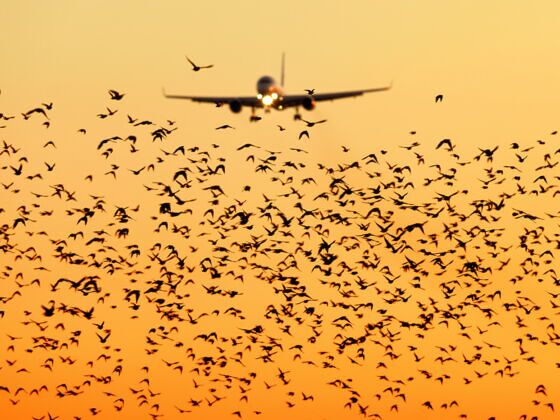
The global tourism boom has contributed dramatically to global warming.

But aside from the intangible awareness and enlightenment brought about by traveling, there’s now a new reality to contend with: the global tourism boom has contributed dramatically to global warming.

Earlier this year, the Intergovernmental Panel on Climate Change reported that aviation currently makes up 3 percent of global carbon emissions, but the rate is increasing.

Then there’s the nitrous oxide emitted by planes, which is twice as bad as carbon dioxide for global warming, and the vapor trails, whose contribution to climate change is still unknown.

Facing Hard Facts

The response to this report in Europe was dramatic: protesters converged upon Heathrow and other airports to demand that airlines take action on climate change.

Nasa planetMark Ellingham, publisher of Rough Guide, pledged to take the train. British mogul Richard Branson is offering a $25 million reward to whoever “solves” global warming.

I consider myself in the upper percentile of Americans when it comes to concern over global warming. I strive to minimize my carbon footprint as much as one can while living in a major city.

Conservation International rates me an “Eco Warrior” scoring 81 out of 100 points (the average score being 44); though Earthday.net still points out that if everyone lived like me, we’d need 2.4 planets in order to survive.

The connection between global warming and flying didn’t truly hit me until this summer when I had the opportunity to travel. As I made my plans (last minute, as always), one question loomed in my mind: could I do this trip without flying?

Could I keep my carbon emissions low?

Now looking back on the summer of travel, the answer is sadly, but conclusively: No.

The Breakdown

I had every good intention not to fly, but here’s how those good intentions paved my own personal road to global warming hell:

  • Leg One, Seattle to Minneapolis - Thirty-six hours by train, or a three hour flight. I have a deadline in Minneapolis. TIME. I fly.
  • Leg Two: Minneapolis to New York City - I have time for the train, but it’s only $50 more to fly. PRICE. I fly.
  • Leg Three: New York to Syracuse - My girlfriend surprises me with a train ticket, but the train is an hour late. This doesn’t bother us, but it highlights another shortcoming of rail travel: PUNCTUALITY. Amtrak is notoriously late, often by several hours. If they can time watches in Germany to the trains, why can’t they do so in the US? The answer is subsidies, but that’s a whole new article.
  • Leg Four: New York to Havana - I briefly contemplate adding the logistical challenge of taking the train to Miami with the required puddle-jump to Havana before I find a flight to Cancun for $180. EASE: I fly.
  • Leg Five: Havana to Mexico City - I was determined to fly back to Cancun and bus it to Mexico City, when I discovered that for only $45 more, I could fly all the way to Mexico City. Time, price and ease push me onto the plane.
  • Leg Six: Mexico City to Seattle - I spend a day calculating that five days of travel and $300 will take me home overland. An hour later I find a ticket for $240.

The fact that flying will result in a ton of CO2 emitted into the atmosphere, instead of a quarter that much by taking buses, won’t sink in for two more months when I analyze the environmental impact of my trip.

At the moment, I’m getting homesick, and once again opt to fly.

Hooked On Air Travel

planet earthThe developed world has dug ourselves into a global warming hole: we’ve spoiled ourselves with ridiculously cheap air tickets and expect to travel inhuman distances almost instantaneously.

Furthermore, the US has somehow managed to squander its transportation infrastructure,
limiting options to flying, driving, and two monopolies: Amtrak and Greyhound.

Being a semi-urban hippy, the Nature Conservancy calculates that I emit just over the world average of eleven tons of CO2 a year. My summer vacation of flying, however, boosted that number to seventeen.

All this is well under the average for Americans (53 tons), but it’s more than enough to be part of the problem. And that’s the more positive of assessments.

Getting Serious About Climate Change

The developed world has dug ourselves into a global warming hole.

I hate using hyperbole: I think it’s unprofessional and turns people off instead of getting them to listen. But, when the IPCC is desperate enough to say that the effects of global warming are “irreversible” and “like a science fiction movie,” I know they’re at wits end - and these are the top scientists in the world.

At the same time, U.S. politicians are slowly beginning to wonder if maybe this global climate change thing is actually for real.

Looking into the impact of my travel has resulted in a lot of navel-gazing: I’m a selfish, piggish American who puts being pampered (ie. flying great distances for very little money) over the plight of the world. I’m everything I strive not to be.

But now I want to look on the bright side. We now know, Brave New Travelers, traveling has an undeniable adverse affect on global warming.

What can we do? Your thoughts are important. Let’s start a discussion below!

Chris LaRoche is almost a teacher, sort of a writer, and humbly an activist. He has written social justice articles for Real Change News and yuppie restaurant reviews. His summer in Cuba can be read at seattlecuba.blogspot.com. He lives in Seattle but will always call Montana home.

  • Stumble It

About the Author

Chris Laroche

Chris LaRoche is almost a teacher, sort of a writer, and humbly an activist. He has written social justice articles for Real Change News and yuppie restaurant reviews. His summer in Cuba can be read at seattlecuba.blogspot.com. He lives in Seattle but will always call Montana home.

10 Comments... join the discussion!

  • Eva replied on February 21, 2008

    I keep waiting for someone to talk about how to make flying less harmful, but none of the big names involved in the air travel / global warming discussions ever seem to go there. (That’s not a criticism of this article, more of the Mark Ellingham / Richard Branson side of things…)

    The way I see it, no one is going to accept that they just can’t fly anymore - it’s just not realistic, at least in North America. The distances are just too great, and people’s lives are so spread out now. (It’s a lot easier for a Brit like Ellingham to be smug about cutting his carbon emissions, he can still take the train to Paris for lunch if he wants.) So there’s got to be a way to improve things - and also of course, cutting down on our volume of flights where possible. But I’ve got family spread out from the Yukon to Arizona and from British Columbia to Nova Scotia, and no matter how guilty I feel about it, I’m not going to skip weddings and funerals and everything else.

    I’m hoping, somewhere, there’s a third option, so I don’t have to choose between cutting out flying and destroying the earth…

    (Report comment)

    ↵ Reply
  • Carl replied on February 21, 2008

    It’s pretty simple, not flying long distances is going to be slower, more expensive and not as convenient practically every single time.

    If you were truly that concerned about the impact on global warming you would pay the extra $45, $50, $100, etc. in order to not fly.

    Your excuses are 1) price 2) speed and 3) convenience. You will be able to come up with those same excuses every single time because it’s just a fact that while air travel is a contributor to global warming… it is damn easy, cheap, and convenient.

    (Report comment)

    ↵ Reply
  • Greg Wesson replied on February 21, 2008

    I struggle with the same issue. I fly a lot for work, and have started to buy carbon offsets for the flights I take, though I do think it’s a cop out - instead of changing my travel patterns, I buy my way out of them.

    You mentioned the puncuality of the trains as being a big issues. Another problem with the trains in North America is the scheduling and frequency of trains. In the summer of 2007, I had to travel from Toronto to Detroit a number of times.

    The distance between these two cities is a straight 370 kilometers along. It’s a 4 hour train trip or an hour long flight, but when you add in the time to get to and from the airports, clear security and immigration and all, it’s about an even amount of time.

    Via Rail runs trains down to Windsor, Ontario, but the departures are too late in the morning to get me to Detroit on Monday mornings in time for work. If instead of having the train leaving at 7:50 am and arriving in Windsor at 11:30, if the train left Toronto at 6:00 am and arrived in Windsor at 9:40 am, that would be a very useable proposition.

    But as the train leaves too late and because I don’t have a car (trying to reduce my carbon footprint by taking public transit), I ended up flying Air Canada into Windsor, and taking a combination of taxis and buses between the Windsor airport and my workplace in downtown Detroit.

    If Via rail had more than 4 trips a day, the train would be a much more viable option for business travellers like myself.

    (Report comment)

    ↵ Reply
  • Jacob replied on February 21, 2008

    A good point at the end–traveling is always less “green” than staying put.

    As far a business goes, I think Cisco is going to save the world. Once upon a time, salesmen delighted in taking constant, unnecessary, company-funded flights to “woo” customers and “maintain business relationships”. Now these same businessmen are lamenting company cutbacks and high-speed video conferencing.

    But before I start spanking myself for being a bad boy about carbon emissions, I want the IPCC to speak to discrepancies in their computer models (specifically, their model’s inability to recreate what has already occurred) and Professor James White’s 2000 finding that showed a similar temperature/sea level escalation 19,000 years ago (long before the rise of the Cadillac Escalade).

    http://www.martinfrost.ws/htmlfiles/dec2007/cloudy_outlook.html
    http://www.colorado.edu/news/releases/2000/538.html

    I’ll compost, drive a compact car, and take a train when necessary. There’s no doubt that our greenhouse gas emission have negative impacts on our ability to survive on Earth, but I’m not buying 100% into the belief that my oil-consuming ways are the only cause for rising temperatures.

    Maybe people who own coastal homes should move inland a bit. And those smarmy Polar Bears have had it coming for a while. ;)

    (Report comment)

    ↵ Reply
  • Marilyn Terrell replied on February 21, 2008

    Thank you Chris for taking the time to do this detailed appraisal of your travel choices. But don’t beat yourself up over it. At least you’re honest, not hypocritical or self-deluded, like those celebrities who moan about climate change yet don’t change their own travel habits. Which makes me wonder: if global warming is really an imminent and cataclysmic problem, why aren’t more climate change spokespeople ACTING like it is?

    (Report comment)

    ↵ Reply
  • Haldane Dodd replied on February 22, 2008

    This discussion is a real insight into the predicament travellers are finding themselves in when it comes to making decisions about reducing their carbon emissions. There are other travel choices out there but, like you say, they’re not always a desirable alternative.

    Regarding aviation, Chris is correct that the industry is responsible for around 3% of global greenhouse gas emissions (and 2% of CO2 emissions alone) but this does have to be put into perspective against other elements like electricity generation (at 35%), road transport (18%) and deforestation (25%).

    I actually work at the Airports Council International and can tell you that the industry has a commitment to reducing its already small footprint – with a lot of new technology and operating procedures. Changes that are making a real difference. There’s a lot of information on http://www.enviro.aero you may find interesting.

    I guess what it comes down to for me is personal choices - Greg Wesson talked about his experience with rail. Luckily in Europe, we have a very good rail network. But that option does not exist in many parts of the world or for journeys of over a certain number of hours. It then comes down to using the best form of transport available to you. Of course, there is also the personal option of offsetting your travel impact by investing in energy efficiency projects or rainforest protection as I have done.

    (Report comment)

    ↵ Reply
  • Daniel Harbecke replied on February 22, 2008

    While I agree that cost influences frequency, it may not be accurate to say that they’re the same. The road to climate catastrophe could be paved as easily with extended vacation time and higher salaries as with cheaper airfare. It’s the practice, not the price.

    If you’re a frequent flyer for work, the cost of the flight is is trivial compared to how often you’re flying. They need you on the ground to do what you’re doing, not in the air: it’s often better just to keep someone abroad than to keep them going back and forth.

    Kudos to you, Chris, in drawing attention to something we really need to focus on yesterday. Not they, WE. By 2020, 1.6 billion people are estimated to be going abroad. Your article reminds us that this planet just can’t support that kind of pollution.

    Something must happen to change the trend. Either we do it “with the lights on,” or it’ll be done for us when we hit the wall.

    (Report comment)

    ↵ Reply
  • Daniel Harbecke replied on February 25, 2008

    Sorry - should cite my source for those numbers:http://www.unwto.org/facts/eng/vision.htm

    (Report comment)

    ↵ Reply
  • Chris LaRoche replied on March 19, 2008

    Thank you everybody for your comments and input.
    As for the figures and numbers cited in my article, I gotta be the first to admit that the numbers swamped me. I’m horrible at math as is, but it’s extremely difficult to consistantly find good numbers on the impact of air travel on global warming: be it projected growth to the amount of CO2 emitted, everyone cuts the pie differently.

    Having said that, I wanted to share an important source made since writing this. The most important thing (movie, show, website, explanation) I’ve seen in a long time is http://www.StoryofStuff.com. It very clearly connects the dots between environmental degradation, political corruption/voter apathy, corporate control and our collective moral decay. Think of it as the non-sci-fi version of the Matrix or They Live, laying out “the meaning of life” in consumer-driven USA (Canada, I think you count here too).

    Second is a blog I’ve been following: No Impact Man, noimpactman.typepad.com about trying to live with no impact. And just to respond to Jacob’s comment questioning global warming (though my apologies for not reading your citations beforehand), I’ll link to here:
    http://noimpactman.typepad.com/blog/2008/03/why-the-debate.html

    (Report comment)

    ↵ Reply
  • Tim Patterson replied on March 19, 2008

    Excellent discussion on this article. Thanks everyone, for weighing in.

    Marilyn, you wondered why more climate change spokes people aren’t changing their high-impact lifestyles. Me too. I can’t wait until BNT/Matador (and perhaps Natl. Geo too?) are a global community of people living and working in adobe huts and bamboo solar-equipped bungalows in the foothills of every mountain range in the world.

    I hope that’s what the post-oil future looks like.

    (Report comment)

    ↵ Reply

Leave a Comment

Get BNT by Email


Jump To Category:


Explore the Community


Latest Community Blogs

  • Hey all! As you can see I am about to head to Oaklahoma for my uncle's wedding.  What you may not know is that I am...
    » posted on 2 July 2009
  • The worst place a vagabond can be...is stuck at a pit stop. There is no abode for vagabonds; there are only the world’...
    » posted on 3 July 2009
  • On and off over the years I've had some experiences teaching English in Japan.  I see questions about it from membe...
    » posted on 2 July 2009

Popular Stories on Matador

10 Tattoo Clichés To Avoid At All Cost

If you have tattoos (like me) then you know people are ... 

"Daggering" in Jamaica: A Dance Craze Gone Too Far?

The spiraling popularity of "daggering" -- a "lewd" dan... 

Hostel Sex: A Practical Guide For Backpackers

Getting it wherever a backpacker can...... 

Inside Japan's Freaky Themed Bath Houses and Bars (NSFW)

Prostitution is illegal in Japan, which may be one of t... 

Teaching English In Japan Is Awesome and Sometimes Hilarious

You never know what your students are going to write.... 


Focus


Blogroll