Brave New Traveler - Online Travel Magazine

The Traveler’s Guide To Enlightenment

Print This Post Print This Post    4 Apr 2008 in Spiritual Travel by Ian MacKenzie
Seeker: “Teach me the way to liberation.” Zen master: “Who binds you?” Seeker: “No one binds me.” Zen master: “Then why seek liberation?”
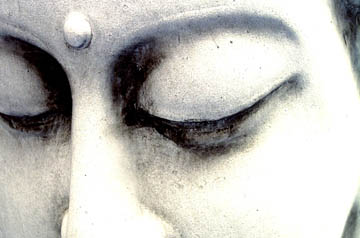
Photo by Zweettooth

The desire to travel can be spurred by a variety of motivations. To see the world. To push our boundaries.

Perhaps to gain the ultimate truth: enlightenment.

But what is enlightenment? And how would we know it if we found it? For me, I’ve found a valuable guide in Zen Buddhism.
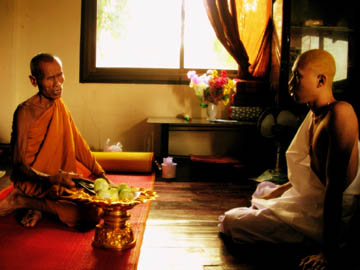
First of all, I confess I don’t actually know much about Buddhism. I know more than some people, but I recognize that in the bigger picture, it’s not very much. In fact I don’t consider myself a Buddhist. I don’t walk around in a robe or have a bald head, and I’ve never lived in a monastery.

Second, there are many different schools of Buddhism, just as there are many facets of the world’s other religions. Some sects are more strict than others and have differing views on Buddhist doctrines.

For the purpose of this article I will explore the sect of Zen Buddhism.

Finger Pointing At The Moon

If I told someone I was a Buddhist they probably couldn’t help but conjure up familiar images of monks and jolly looking statues with rounded bellies.

If I told someone I was a Buddhist they probably couldn’t help but conjure up familiar images of monks and jolly looking statues with rounded bellies. It’s usually not deliberate.

As soon as someone tells you that they belong to a certain religion or group or political party, the stereotypes come tumbling after.

The only way to negate the onslaught of these stereotypes is to not fight them at all. Instead, it is far better to recognize them as stereotypes than to block them from entering your mind in the first place. This is the path to Enlightenment.

“Buddha” simply means “One who has become Enlightened.”

The first man to become the Buddha lived a few thousand years ago in India. He was a prince to whom every whim was catered, every desire satisfied. Yet he saw the misery of the people around him and decided to give up his privileged life in favor of discovering the source of human suffering.

After a long journey, the prince came back with the some profound insights, including the Four Noble Truths. The most important of these Truths can be distilled as duhkha (doo-ka).

Cycle of Suffering

Photo by Bugtom

Duhkha is a Sanskrit word that refers to a wheel out of kilter, a wheel that performs an important function.

Like a warped wheel on a cart that causes the passenger great discomfort as it wobbles, rises, then drops - only to be repeated again and again.

“Something basic and important isn’t right. It bothers us, makes us unhappy, time after time,” says Buddhist teacher Steve Hagen in his book Buddhism Plain and Simple.

“Of course there are moments of pleasure, but no matter how hard we try to cultivate pleasure and keep it coming our way, eventually the pleasure recedes and the disturbance and vexation return.”

The first Matrix film was an exploration in Buddhist philosophy, veiled in the guise of an “action movie with killer robots.”

In the beginning Neo is much like a normal human being, wandering through life with little confidence as to why he exists in the first place. He just knows that something is wrong - something is out of kilter and to use Morpheus’s words, Neo just can’t seem to figure out why that is. This is duhkha.

Duhkha arises from not “seeing” Reality. In Neo’s case, the Reality he couldn’t see was the Matrix. Morpheus allowed him to awake from the cycle of duhkha by telling him the truth. He simply showed Neo his Reality - that he was a human battery living in a tube.

And what was the result? Neo became enlightened…and proceeded to kick a lot of robot ass.

A Fist Of Jewels

But you say life is hardly like a movie? Quite true. So let’s look at another example as provided by Steve Hagen:

“Suppose I were to come up to you, hold out my closed fist, and tell you that I have a jewel in it. Now, I might be lying or I might be telling the truth. Either way, you have little to go on. As long as my hand remains closed you don’t know whether or not I have a jewel in it. The most you can do, given the limited information I’ve provided, is believe or speculate that I have, or don’t have, a jewel inside my fist.

“Only when I open my fist can you see if there’s a jewel in it or not. And once I do it, the need for - and usefulness of - belief vanishes. You can see for yourself whether or not there’s a jewel, and you can base your actions on what you see, rather than on what you think. So it is with any issue, question, or dilemma. We therefore cannot rely on what we merely believe if we wish to see Truth and Reality. We can only rely on actual perception and direct experience.”

Once you begin to see reality for what is really is, a lot of amazing things start to happen. You start to question the things that have bothered you in the past and continue to be a source of stress today.

Much of what we strive for - wealth, love, happiness - are valid desires, yet are sold to us only through material products. See the reality of television commercials and advertisements on the street. What are they really selling you? A product? A false path to being satisfied with your body and your life?

“Think about the sorts of difficulties we have dealing with our reality - our personal reality and that of our society,” writes Canadian philosopher John Raulston Saul.

“Much of that difficulty comes not from reality but from our denial of its existence. False individualism comes from the false sense of how we might fulfill ourselves. Self-fulfillment does not come from setting ourselves apart. It is the result of accepting our context.”

The Eternal Now

The average person watches nine years of television in their lifetime. Nine years. That’s a third of the time I’ve been on this earth.

“Now” is what you’re doing at this moment. It is you sitting in your chair, hand on the mouse, pupils reading the words on this screen.

Certainly it’s a statistic horrendous enough to get some of those couch potatoes off the sofa. But what is the alternative?

Some people believe the only way to “seize the day” is to parachute out of airplanes or ski down a glacier Mountain Dew-style. But for those people that see reality, seizing the day is really just experiencing the “now” within the context of Reality.

“Now” is what you’re doing at this moment. It is you sitting in your chair, hand on the mouse, pupils reading the words on this screen.

It is your lungs breathing the air and the itch behind your ear. “Now” is the present - a moment in which we perpetually exist. There is nothing else, other than this moment. The past is a collection of memories in your brain, the future a collage of your colourful imagination.

The events which you think may happen in the future may become the “present”, or they may not. Either way, there isn’t much else to do but enjoy the “now.”

“This provides us with a chance to wake up,” says Steve Hagen.

“You have this chance to wake up right now, in this moment, and in every moment. Most of us tend to think that it’s the other way around, that we’ve got to figure something out. But no. We don’t need to figure out our own experience; it’s already here, firsthand. Thus enlightenment is already yours.”

Following these ideas, I have had some amazing rides on the skytrain. I’ve marveled at the way the sun casts it’s rays through the leaves of trees, and at the feeling of sand in my fingers. I’ve stood in the rain and felt it dribble down my back. I’ve never passed up an opportunity to take the stairs, simply because it feels so good to walk.

And I’ve come to realize that true freedom is not the choice between eight different kinds of hair conditioner, but to not desire anything at all in the first place.

Engaged Reality

This is not to say that nothing is worth doing. I’ve never been skydiving before, I hope to some day try it out. And there’s no shame in the excitement of unpacking a brand new television.

It’s just a matter of stepping back and basking in the glory of the raw experience, whether it’s a good experience or a painful one. After that, writes spiritual guru Dean Sluyter, “we again see magical shapes in the clouds, even as we seamlessly handle our grownup responsibilities. There’s no conflict between these two modes: we can be childlike without being childish.”

Here lies the contradictory nature of seeing reality.

For if you don’t look hard enough, it’s easy to slip into the idea that to abandon desire is to abandon purpose and motivation. That the only thing left to do is live in a hermit shack atop a lone mountain, periodically emerging to collect berries and shake your head at the “un-enlightened masses” down below.

In fact, this couldn’t be farther from the truth. To notice timelessness is to receive the gift of the now, to accept the present of the present. This moment is already how it is; it’s too late the change it.

Release From Suffering

To accept the reality of the present is to release your mind from worry, from duhkha.

To accept the reality of the present is to release your mind from worry, from duhkha.

Of course, this doesn’t excuse you from responsibility, or from being numbed into zombie-like compliance. If your job sucks, ask to do something more interesting. If your boss denies your request, either find the fun within your current job, or quit and do something else.

Seeing reality means accepting that there are problems in the world — that drunk drivers kill people everyday, that governments start wars, and that no can be blamed for your remaining in your current situation but yourself.

But don’t let that dishearten you. Now that you see reality, you’re free to do something about it.

Unfortunately, there is one certainty that we can do nothing about.

We can stall it with technology, push it aside with entertainment, or let it hang over our heads like a black cloud, poisoning our experience of life.

This certainty is death.

For most of us, death is pretty depressing. It’s the end of the line. The black void. But I believe most of us have got death all wrong.

When you step back and attempt to see reality, to imagine yourself in the larger context of life, you realize that there would be no life without death. Mortality is perhaps the greatest gift given to those who embrace life with an open mind and a heart to gather it in.

Think about it, says Steve Hagen.

“Pick up a flower - a beautiful, living, fresh rose. It smells wonderful. It reveals a lovely rhythm in the swirl of its petals, a rich yet dazzling color, a soft velvety texture. It moves and delights us. The problem is that the rose dies. Its petals fall; it shrivels up; it turns brown and returns to the earth.

One solution to this problem is to ignore the real rose and substitute a plastic one, one that never dies (and never lives). But is a plastic rose what we want? No, of course not. We want the real rose. We want the one that dies. We want it because it dies, because it’s fleeting, because it fades.

It’s this very quality that makes it precious. This is what we want, what each of us is: a living thing that dies.”

All Good (And Bad) Things

So that’s the truth of it. All of us will die eventually.

For some it will be sooner, for others much later. Everything we own, everything we worked so hard to afford - that nice car, the house, the stereo - will be lost. We can’t take it with us.

And we can continue to deny this reality of our existence, for which we will endure great duhkha, or we can choose to experience the time that we’re given and leave behind a legacy of peace and understanding.

Human beings will always have problems, there’s no way around it. But it is the experience of working through them that allows us to grow and to learn. And what is life if not a learning process?

In a nutshell, that’s the basics of Zen Buddhism.

So the next time you turn the handle of your front door and step out into the wide world, see reality and realize that no matter what your problems, chances are, they’re probably not that bad.

And remember, as Neo discovered, there is no spoon.

Ian MacKenzie

Ian MacKenzie is the founder and editor of Brave New Traveler. Aside from writing, he spends his time exploring the fundamental nature of existence and wishing he did more backpacking.

| Share on Facebook | Stumble it!

7 Comments »

  1. Comment by Daniel Harbecke — April 4, 2008

    Whew! I see you like your coffee black, Ian! Om mani padme, hummm… =)

    Pretty heady stuff. Get thee to a used bookstore and buy a copy of Vagabonding in the USA by Ed Buryn. Rolf Potts raves about this guy. There’s very little if anything said of Buddhism, but it addresses some of the themes you’re talking about. And I think Ed’s a hippie! Which makes a kinda charming read.

    It’s easy to belittle personal quests of enlightenment, and “it takes guts to be gentle and kind” (Smiths reference - where’d THAT come from?). I enjoy this site so much because people feel comfortable to tell one another about the seashells they’ve found out walking on the beach. Give me that impassioned voice anytime, over the bilge and formula of pop drivel. It may not be D.T. Suzuki or Alan Watts necessarily, but it’s empowering.

    Thank you for sharing some thoughts that helped take you a little further down the path. I found them all worthwhile - and very, very rich for Friday morning…

    If I should move past the hand that points this weekend, and come upon the fullness of the moon’s “heavenly glory” (this time from Bruce “JKD!” Lee), I’d like to think it’s because your article gave me the finger. Laughing Buddha! =)

  2. Comment by Ian MacKenzie — April 4, 2008

    Glad you enjoyed the article Dan! I read Rolfs book and remember him mentioning the other guy. I’ll definitely try and pick up a copy. Also thanks for your excellent comments. They’re often as fun to read as the articles themselves.

  3. Comment by Jacob — April 4, 2008

    Fantastic read, Ian. I wish such teaching could be imposed upon people in more dire need; however, I get the feeling that you’re not going to find incredible opposition/ignorance to such a view on BNT.

    ‘“Buddha” simply means “One who has become Enlightened.”’

    I think followers would say similar things about “Christianity/Jesus”, “Islam/Mohammed” (peace be with Him), or Zeus. How many have found their way through the Lord, Him, the Chosen one, the Dalai Lama or Flying Spaghetti Monster–is their enlightenment any less? In many instances, the images elicited by labels such as “Christian”, “Muslim”, or even “Agnostic” are significantly more damning than the granola-and-pudgy-statues stigma of the Buddhist.

    The pity about all religions is when they transcend the realm of simply being good life practices and instead become a Standard Operating Procedures manual that clearly documents what spiritual enlightenment is and isn’t. In this way–in my humble opinion–all religious viewpoints succumb to a sinister division that negates the teachings. My enlightenment is better. My temple is bigger. Et cetera.

  4. Comment by Ian MacKenzie — April 4, 2008

    Jacob - You’re right, every religion has their own view of “the holy one.”

    But I think a big difference between Buddhism and say Christianity, is that there is no deity to be worshipped. Buddha isn’t regarded the same as Jesus. Buddha was just some guy who sat down and figured out a way to become enlightened (in his case, excessive meditation).

    He is to be respected more because he figured it out and says “Here’s a map. if you want to follow the same thing I did, chance’s are, you’ll figure it out too. But of course, you don’t have to.”

    Another central tenant of Buddhism is that nothing should be believed because someone else says so. The only thing we have is our own “direct experience” to know what is the truth. This is also quite different than Christianity, where the emphasis is placed on “faith” and service to an abstract God.

  5. Comment by Jonathan — April 10, 2008

    Interesting article! I enjoyed the Matrix analogy and found the article well thought out. The Power of Now by Eckhart Tolle was the first book that opened the pathway to enlightenment for me. I am currently reading his, Practicing The Power of Now, which contains its essentials teachings. I highly recommend it to anyone wishing to gain a little enlightenment in life. In my favorite part of the book, he talks about being in a rush to get somewhere, coming to a red light in the road, and becoming frustrated. He asks the question, do you want to feel frustrated? Do you like being frustrated? If you wanted to, could you be happy at that moment instead of frustrated? It’s a simple idea that at any given moment we can be and feel however we want in life. You simply must desire to be present and be happy. Of course a little practice is involved.

    One of my blogs is about my search for more enlightenment in life. I hope you don’t mind me leaving the address here, you can always edit it if you want: http://enlightenyourday.com/

    Cheers
    J

  6. Comment by Jhay — April 13, 2008

    I was and Im still fascinated with buddhism.. For me they’re the most gentle and non violent people left in today. I am glad I found a person that have some belief like mine. More Power!

    Nwei, Please visit my blog

    http://noypiexpats.blogspot.com

  7. Comment by Brian — May 1, 2008

    Yes, yes and yes. And travel (with an open mind) provides so many opportunities to discard your favourite illusions and turn your pet ideas inside out. Budget travel is especially good for satori, no ground beneath your feet, no credit card, no one to call upon. You hang over the abyss clinging to the root, tiger above you, tiger below you, mice nibbling at your root.
    Travellers in the olden days believed that the harder the journey, the closer you were to salvation. It needn’t be in the Himalayas although that worked for me, but you do need to be in an environment that mentally turns you upside down, something that may not happen in your cushy condo unless it burned down while you were at the office.
    The question is, Do you take the blue pill or the red? Do you want to see reality and give up your cherished illusions? Do you want to see the engine that runs our “world”? Do you want to see people (even your friends) as they really are? Do you want to know that we are being bred simply for our energy? Nothing more than fatted cows. It’s not for the faint of heart. And, as Neo discovered, Once there, you cannot go back.

    BTW, It’s “tenet” of Buddhism.

Leave a comment

Please note: If this is your first comment, it will be moderated.

Get BNT by Email


Jump To Category:

Latest In Spiritual Travel

Latest Comments