Brave New Traveler - Online Travel Magazine

The Real Story Behind The Thomas Kohnstamm Affair

Print This Post Print This Post    18 Apr 2008 in From the Editor by Tim Patterson
After the firestorm, we’re a lot closer to the truth.

After an explosion of confusion and outrage more typical of Zimbabwean politics than the normal, good-humored tone of this little travel magazine, the Thomas Kohnstamm affair is finally fading into the rearview mirror.

We should have seen the firestorm coming.

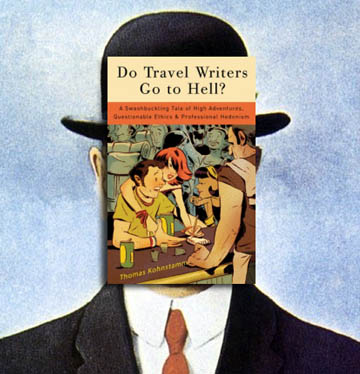
After all, the BNT editorial team wasn’t exactly shy about throwing gasoline on the flames (the photo of Thomas in hell didn’t seem so clever when we learned that he allegedly received death threats).

Given that much of the outrage was provoked by misinformation, in retrospect some of the more inflammatory comments are clearly out of line.

That said, we have few regrets about publishing the post, and feel that with the dust settled, there is much we can learn from the experience.

Reacting To The News

As a reaction to the story, Eva’s post was right on the money.

Here’s one thing we want to make totally clear: Eva’s original post was a response to a developing news story, not a news article in its own right. There’s a big difference.

The facts in the mainstream newspaper and wire service publications that first reported the story were sensationalized and exaggerated to the point of serious distortion. Why this was the case remains unclear, although all parties involved had an interest in making the biggest media splash possible.

As a reaction to the story, Eva’s post was right on the money. So, for the most part, were the opinions expressed in the commentary as the story evolved.

Instead of reacting in the heat of the moment, should we all have stopped writing, taken a deep breath and let the facts fully emerge before responding? Perhaps.

Then again, perhaps not. After all, the fire did a pretty thorough job of burning away the exaggeration, and when all is said and done, we’re a lot closer to the truth than when we started.

Where’s The Real Story?

Kohnstamm comes out of this scandal looking like a mildly sleazy character, but it’s pretty clear that titillating goodies like table service, drug deals and helpful Colombian chicks are just sugary fluff meant to sell books.

So where’s the beef?

In his response to Eva’s post, Kohnstamm wrote the following:

“I am trying to write a book about the truth in travel writing, not some plagiarist who is trying to turn a fast buck off of being an asshole.”

Putting aside the questions of whether Kohnstamm is a plagiarist or an asshole, what does this scandal reveal about the truth in travel writing?

Can You Handle The Truth?

Kohnstamm argues that guidebook writers are often poorly paid, inexperienced writers who sometimes engage in unprofessional behavior.

The sharp decline in quality across the guidebook industry in the last decade is hardly news.

Having just finished a guidebook assignment myself, I can unequivocally state that Kohnstamm is exactly right. The sharp decline in quality across the guidebook industry in the last decade is hardly news.

These days, the professional guidebook writer is a dying breed, and assignments go to eager, inexperienced writers willing to work for flat fees of a few thousand dollars per assignment, with no benefits or royalties.

Lonely Planet, Fodor’s, Rough Guide and all the other guidebook publishing houses aren’t going to disappear anytime soon, but the time gap between (often shoddy) research and actual publication, not to mention the years between updated editions, means that print guides will struggle to compete with interactive online travel guides that offer real-time information.

Here’s a dirty little secret: the guy writing a travel blog about his trip to Colombia is probably no less qualified to give travel advice than the guy who got paid to write a guidebook chapter on Colombia.

Plus, the first guy’s advice is published instantaneously and his contact information is no doubt readily available for readers who want to ask questions.

Traditional guidebooks just can’t compete.

The Rise Of Online Travel Guides

Thomas Kohnstamm contemplating the future.

To me, the real story behind this scandal is the decline of traditional print guidebooks and the rise of interactive online alternatives.

The online reaction to Kohnstamm’s confessions shocked everyone involved, but the swift rush to uncover the truth is indicative of the powerful potential inherent in online travel communities.

Some guidebook writers are already on top of this trend. Robert Reid, a consummate professional and Lonely Planet veteran, recently passed up the opportunity to update Lonely Planet’s Vietnam book.

Instead, Reid went to Vietnam on his own dime and published his research online as soon as he finished his trip. Reid’s online Vietnam guide has everything one could possibly need to plan an itinerary.

In addition to guidebook-style listings for restaurants, sights and accommodation, there are forums, videos and a regularly updated blog. And it’s all available for free.

The Future Is Now

Reid is a prominent pioneer in the switch from print to online travel guides, but he’s hardly making the transition alone. Even Lonely Planet is rushing to get its content online, offering steep discounts on PDF chapter downloads and fostering the development of one of the most helpful travel forums on the web.

Other examples of upstart online guides that rival mainstream guidebooks for usefulness and practicality include ArgentinasTravel.com and TalesOfAsia.

Then there are the online travel communities, like IgoUgo, Trip Advisor and Matador, all of which depend on enthusiastic users to share their travel recommendations.

Who Can You Trust?

My Mom, bless her heart, isn’t quite sure about this whole online travel writing business.

“There’s so much junk on the Internet,” she says. “How do you know who you’re dealing with? When I travel, I want a source I can trust.”

Well Mom, I agree that making travel plans on the basis of a random stranger’s blog isn’t a smart idea. But in the best of these online travel communities, the bloggers aren’t random strangers. They’re people – fascinating and passionate – and by reading their profiles and blogs, it’s easy to get a sense of who they are and where they’re coming from.

If I was going to Puerto Rico, I’d talk to Julie. If I was going to San Francisco, I’d hit up Ross. If I was going to Ottawa, Eva would get me the latest tips.

If I was going to Colombia, I’d talk to Richard. He lives there. And I have an inkling that he knows the place a hell of a lot better than (former) Lonely Planet author Thomas Kohnstamm.

Do travel writer’s go to hell? Nah. They go online.

Tim Patterson

BNT contributing editor Tim Patterson travels with a sleeping bag and pup tent strapped to the back of his folding bicycle. His articles and travel guides have appeared in The San Francisco Chronicle, Get Lost Magazine, Tales Of Asia and Traverse Magazine. Check out his personal site Rucksack Wanderer.

| Share on Facebook | Stumble it!

9 Comments »

  1. Comment by N. Chrystine Olson — April 18, 2008

    ‘Nough said! Great job Tim….now on to more important tasks like planting trees and finding frogs ;)

  2. Comment by Joshua Berman — April 18, 2008

    Here’s my two cents, another guidebook writer contemplating the meaning of guidebooks in the post-Kohnstamm era:

    http://blog.joshuaberman.net/0.....ebris.html

  3. Comment by Jacob — April 18, 2008

    Great rounding-out to a ridiculous scandal. I still found it to be in bad taste for him to call Eva’s integrity into question, but c’est la vie.

    I actually agree with a lot of point in Josh’s (above) writeup as well.

    Fodor’s and such appeal to…well…Tim’s mom and similar. :) My father-in-law swears by Rick Steve’s and another “upper class” guide that slips my mind. These are people with lots more disposable income than my broke ass, who will pay a little more for a “trustworthy” guide. And the last I knew, RS and Fodor’s were still paying their writers pretty decently.

  4. Comment by Scribetrotter — April 19, 2008

    I don’t agree that the days of the print guidebook are gone… I’m all for hybrid research. I go online to get the latest information and tips, what’s hot, what’s not, special deals and good meals. For the rest, I still love my guidebook, in print. Although I do sometimes download updated guides onto my iPod, for my travels there’s still nothing that beats the Book (not necessarily LP - depends on the country), with folded back pages, scribbled notes and squiggles and highlights. Call me old-fashioned but I have yet to set off with dowloads and updates only…

  5. Comment by Dzof — April 19, 2008

    It sounds like an apology, but without it really being one…

    As experienced and well-informed members of the world yourself, you should know that although a cover can describe a book quite well, it’s another thing to judge by it. So you ranted, and raved, and were a little wrong. And you acknowledged all that. But without actually saying ’sorry’.

    What the heck. Let’s just say you apologised and be done with it.

  6. Comment by Daniel Harbecke — April 19, 2008

    For my part: I’m sorry the guy got hammered, and I’m sorry I added to it where he didn’t deserve it. I’m very sorry (re: sympathetic) Thomas got death threats. I’m NOT sorry for getting angry in the first place.

    Imagine the guidebook of the future: published by companies who don’t care, written by writers who make up facts, purchased by travelers who don’t use them, and everyone wonders why travel writing isn’t taken seriously. Is this the Glorious Future already? Include me out.

    Look, I know guidebooks get shoddy, researchers get lazy, yadda yadda yadda. This isn’t news. When some guy comes off as proud he did it, why should I laugh?

    Sure, sure - you’re the Ubertraveler. You never needed a guidebook in your life. Dysentery just makes you giggle. “Keepin’ it real, brother.” Well good for you, Tarzan. I’ve been through around 30 countries in 4 years “the Slow Way” too, and I still use guidebooks. Apparently, so do enough people to keep LP, Fodor’s and the rest in business. Please, tell me we’re not dredging up the T/T Distinction crap again. Please?

    If travel writers have got no problem getting paid to write nothing but spectacular bullshit for a living, why bother pretending anymore? If this is what it all boils down to, why would Thomas even set the record straight? He should just stick with the Elite out there who’re saying “Grow up, kiddies, this is how the world works” with a condescending smile.

    When something threatens what matters to you, you protest it. You don’t send death threats, but you have every right to get angry. You get out the picket signs and you say NO. And if it turns out to be a false alarm, you apologize to the poor guy and hope there’s better communication in the future. But if anyone thinks I’m going to apologize for helping blow the whistle, I invite you to find, or make the time, to get in line and kiss my ass.

    Thomas, if you’re out there: I’m real sorry it came down on you if it wasn’t deserved. If LP kicked this storm up, you got shafted and I’m sorry for my part in that. I’m glad you got your side across. Now let’s dirt nap this whole thing and get a beer. I’m buying.

  7. Comment by RIkki — April 20, 2008

    Daniel, after having followed the postings and comments, and reading how fired up you were (’course, you were not alone), and then reading your last post, i have to give you kudos for your maturity and humility if you may. And to me, that was worth jumping in, after just observing from the beginning.

  8. Comment by Ferdinand Harmsen — April 20, 2008

    Thank you Tim for bringing the discussion about Thomas Kohnstamm to a higher level. The real question is indeed about what the underlying developments are. Instead of discussing one symptom of them.

    The only thing we can learn from the affair itself is that travel guide writers can write background articles about destinations without visiting them. And so far Lonely Planet has not found that the guides Thomas wrote for are compromised in any way. Maybe the writing is not compromised, but the public trust in the author and the publisher definitely is.

    As you write in your post, the more relevant issue at stake is the question why the overall quality of traditional printed travel guides is in decline. You mention two reasons. The first one is the fact that publishers rely more and more on eager inexperienced writers. The second one you mention is the gap between research an publication and the update frequency of traditional printed guides, which leads to out dated information in them.

    I am not sure if, underpaid and inexperienced writers are the real problem. They might do a lot of copying from other resources, but as everyone knows that has been a practice for ages already in travel guide publishing. I think the real problem is the fact that they work alone and can hardly be checked. Even Lonely Planet admitted this in their response to the affair. The writing and checking process of traditional printed travel is not transparent enough, which leads to a lack of trust among users of the guides.

    On the second reason, the gap between research an publication and the update frequency of traditional printed guides in an ever faster changing world, I fully agree with you.

    You say that the real story behind this affair is the decline of traditional printed guidebooks and the rise of interactive on-line alternatives. But the question is if the one will replace the other. Don’t you ditch the printed travel guides to fast?

    During ones travels and also after them, printed guides are a very nice medium. They can travel with you and you can keep them as a trophy after your trip. Digital media can’t do that.

    I personally believe that a better integration of on-line and print activities would lead to solutions for all challenges for travel guide publishers mentioned above. It could even offer more advantages.

    The fact that most travel guide writers are working alone and cannot be checked enough has been solved already by several collaborative travel guides. They use a wiki-concept to facilitate several writers to work together on travel guides. The writers check each other and the whole writing and checking process is very transparent. This openness could bring back the trust among users. These collaborative travel guides are also able to update information the moment someone discovers it is no longer valid. Any serious publisher should have enough editorial experience to organize a community of authors, editors and travellers that collaborates on their travel guides in such a way.

    The only problem is that it is hard to take a wiki with you while travelling. And you cannot put it on your bookshelf as a trophy the moment you return home. But this is a problem that can be solved too. Innovative publishers should be able to combine the wiki way of gathering and maintaining content with a printing on demand process that enables them to offer each customer a tailor-made and up to date guidebook for his next trip.

    So the future may not be now yet, but it should not be far way. And maybe it will not mean a transition from printed guidebooks to on-line alternatives, but an intelligent combination of the two with the best of both worlds.

    Ferdinand Harmsen
    founder/chairman of WritingTravellers, an open guidebooks project.

  9. Comment by Tim Patterson — April 21, 2008

    Thanks for the thoughtful comments everyone - although Dzof, you’re right - my follow-up was not meant as an apology.

    Ferdinand, thanks for sharing your opinion. I agree that better integration of print and online travel guides is an excellent idea, one that publishers should pursue. What about a guidebook without much in the way of specific listings? It’s listings that take up the most effort, after all, and are most subject to change. If guidebooks were more focused on background info (and written by local experts), travelers could learn about the history, geography and cultural context of their destination with the guidebook, but research specific guest-houses and such online, at an affiliated site with an interactive component.

    There’s also room for books like the excellent “To Asia With Love” series (I’m a contributor to the new Japan book), which tap the collective knowledge of local experts to give lush, detailed descriptions of truly special experiences, rather than just listing 20 word blurbs about restaurants and hotels.

Leave a comment

Please note: If this is your first comment, it will be moderated.

Get BNT by Email


Jump To Category:

Latest In From the Editor

Latest Comments