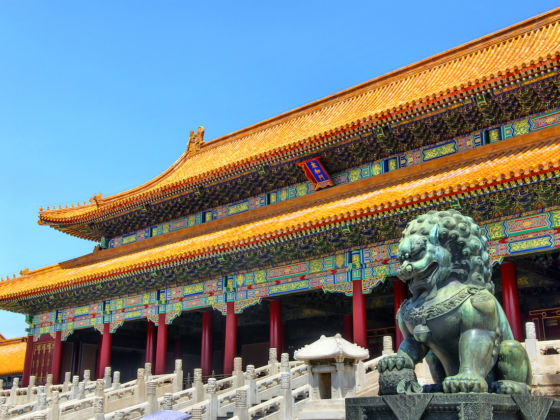
Photo by Shapeshift
Amid the violence of Tibet, a debate has emerged in the west: Should we boycott the Beijing Olympic Games?
Protesters in Paris disrupted the torch relay forcing officials to extinguish the torch 5 times. Similar incidents happened when they lit the Olympic torch in Greece and London.
There is talk in the United States of boycotting the opening ceremonies, Germany is talking about boycotting the whole event, and many groups are calling for the general populace and for athletes to boycott the event altogether.
All of this is designed to “shame” China on their human rights record and thereby cause enough embarrassment that China will be forced to change their ways in order to seem credible on the world stage.
Will this be successful? Should we politicize this sporting event? Will we really push China in a new direction?
The answer, I believe, is a resounding NO.
While China certainly needs to improve its human rights, boycotting the Olympics will not get them to do so. Those who believe it will lack a complete understanding of Chinese psychology and history.
The Prism Of History
China strongly maintains a policy of staying out of people’s affairs. They believe it’s no one’s place to tell them how to live their life and thereby take great offense when people tell them what to do.
Nationalist pride is at stake and they won’t be seen as bowing to foreign pressure.
Over the years, the Chinese government has stoked nationalism as a way to legitimatize itself amid a diminishing communist system. That is why in recent years there have been severe Chinese protests in response to what the Chinese people see as foreign pressure.
To them, the Olympics are a matter of honor. It is a matter of national pride, and they view western calls for a boycott as just another example of Western interference in China.
Chinese history is filled with incidents in which the West has subjugated China, and they still harbor a lot of resentment about this past.
Issues like Tibet and Taiwan are seen through the prism of historical events like the Opium Wars and partitioning of places like Hong Kong and Macau.
Any talk of what “China must do” only increases their resistance and hardens their position. Chinese youth have been educated in this system and, watching the news, one understands why they are behind the furor.
The Chinese government has raised a generation on nationalism. To them, this is just another example of Western interference and hypocrisy.
Starting A Dialogue
Photo by Yves
China entered the world through engagement in the 1970s and will only reform through further engagement.
The most effective action is to go, talk, and get the Chinese people involved. If there is both internal and external pressure, you might get some change.
The Chinese government is always more willing to work a deal when it is done behind closed doors. Saving face and avoiding shame is a must for a government who legitimizes itself through nationalistic pride.
If the people feel they caved, they lose all credibility making maintaining stability even harder to achieve. The government will never risk such an outcome.
If the Olympics are a disaster and China views the debacle as the West once again trying to control their affairs, China will only become more resistant to working with the West on other global issues.
We can’t let that happen. China is too important – we need them on climate change, Darfur, and Iran.
A Slap In The Face
Looking at Chinese history will show you how they will act now. Chinese leaders are pragmatic. They need to be perceived as a global player and have done things in the past to change, albeit slowly.
However, they also know they have a population of 1.4 billion that wakes up each day and needs to be fed and cared for. Their first goal is stability – and they won’t risk stability for global recognition.
I don’t agree with many of China’s policies. I think they should do more on Darfur, talk to the Dalai Lama, and reduce abuses within their borders.
But the Chinese want to be taken seriously. They have come a long way from the China of Mao and one can’t expect a democracy that took Western civilization a thousand years to appear in thirty. We have prodded them this far and this is their way of showing the world they have arrived.
Boycotting the Olympics, an event the Chinese see as their coming out party, will only be viewed as a slap in the face.
So don’t boycott the Olympics. Go and spread ideas. Interact with the people. Dispel myths about westerners, show them they are respected, that we can work together.
Then you’ll begin change China. From the bottom up.
Should the international community boycott China? Share your thoughts in the comments!
About the Author
Related Posts
37 Comments... join the discussion!
-
-
“Boycotting the Olympics, an event the Chinese see as their coming out party, will only be viewed as a slap in the face.”
I think that many people feel that the Chinese government deserves a slap in the face.
That is where a lot of the boycotting opinion comes from. It is anger. I agree with that in part. I don’t care to be considerate of someone trying to avoid shame when they are guilty of horrible crimes. Their saving face is not my primary concern.
However, I agree with the author. I don’t believe that boycotting the Olympics will bring the quickest and best results.
↵ -
I didn’t even touch on the hypocrisy issue but Chinese officials have said privately that they see the west’s hypocrisy on issues like this but have decided not to bring it up yet but if we see it, they certainly see it. One day I suspect they will bring it up and say “we’re not going to do what you say because you don’t do what you say.”
↵ -
China should give importance of the human rights.
↵ -
I’m a Chinese girl. Your perspective is right. Chinese people do not have enough human rights like you. But do you ever think why Chinese people did not require the human rights? First, I accept that our media always avoid a lot of imformations, they do not tell the people, so common people may know the event, but not all sidedly. Secondly, everybody in China has patriotism, because the whole county was taking into pieces in the history. The people in the past wanted to see the country was only one, not pieces. So they could lose their lifes for others, for the others living peaceful. The people really do not care the human rights and the benefit of theirselves , because they care the integraty of the whole county, I know you may feel strange, this is attributed to the culture. So please do not boycott Beijing Olympics for the human rights, if you will be China, you can feel the passion and goodness of Chinese. The people in China are really kind.
↵ -
Hey Tim,
I should have specified “the government of China” – I certainly have no beef with China’s people, their vast and varied cultural heritage, and so on. But I really don’t think the present political administration should have been given this opportunity by the IOC, when so many of their actions are so contrary to the Olympic spirit, and they show no substantive sign of owning up to those actions or changing their ways.
“Their historical record is not angelic, but – proportionately – it’s no worse than that of your country or mine.”
Arguable, but probably fair enough in general – except for the issue of chronology. Tiananmen Square was 20 years ago, and still has yet to be officially acknowledged. You can still get arrested for trying to mourn the thousands of unarmed students who were killed there. Meanwhile, the occupation and cultural destruction of Tibet is ongoing.
There’s a lot of “people in glass houses” talk in Canada over this – concern that if we come down too hard on China, we’ll get the same treatment in Vancouver in 2010. But the Canadian government is at least groping towards solutions to its past actions – I spent the last year working in native land claims litigation, and while it’s an imperfect and painfully slow process, no one is getting imprisoned for suggesting that past governments did terrible things.
I don’t know what the solution is – I agree with Matt’s points about how little a boycott is likely to accomplish. I just wish that this situation could have been avoided with some foresight in the awarding of the games. My final two sentences in my previous comment certainly lacked nuance, but I stand by the general meaning of them. The Olympics have always meant a lot to me, and it really upsets me to see the way the lead-up to these ones have gone. Instead of opening a dialogue as you said, they’ve been used as an excuse to crack down further. Communications have been tightened, foreigners have been restricted from entering, and of course there’s the recent violent crackdown on protests in Tibet…
↵ -
Tim,
Hello, I have seen your comments just now… so, I am sorry the reply maybe late.
In the opinions of the common Chinese, they inherited their ancestor. This character is not easy to change. I think some of the people can feel this is not good, but more people can not be aware of this.. Maybe this is the essential reason.
About the hypocrisy issue, if you know Asian, you can understand this issue. In the history, Confucianism had affected all China, even all Asia. This is proud to every people in China. The kids must recite the old poems and a part of the paleography from three or four years old in the old China.Now, the children also must recite the poems and the paleography , but they only learn less than the old kids. Some Chinese idiom is from the old poem and the paleography. What’s more, the children must study politics from their junior high school. I hate this kind of politics, because it is very partial. I think it is a some kind of religion. A lot of things from the old China, from the Chinese traditional courtesy, from so many reason, Chinese government tell something partially for their face (you can understand as self-respect). They usually do things for their “face”, so… the hypocrisy issue come out.
↵ -
I was interested in doing an article on the same subject, but knew so little about Chino-Tibetan relations (which is why I wanted to do it!) that I did two interviews: one with a Chinese woman who participated in the Tianenmen protests, the other with a communications professor from the Sichuan province. I realized even after the interviews I still didn’t know anywhere near enough about what’s going on.
There’s some very powerful history working under the surface. There are dynamics that don’t make it as simple as “let the Quebecois have a referendum.”
The Chinese feel shame in having the outside world interfering in what they consider an internal matter, and the country as a whole would suffer a remarkable loss of resources if Tibet “seceded from the Union,” if that perspective rings a bell. They also feel that using the Olympics as a vehicle for this issue confuses the two, adding more fuel to the insult.
Westerners respond with a knee-jerk reaction against the repression a smaller population – it’s one of the values that makes America what it is. The majority of our young history has been spent paving over the lives of Native Americans, a cause of deep, unresolved guilt. We don’t want to see others commit what most of us consider a grave mistake.
But if California (or better yet, Texas) were to suddenly drive for independence, I think most of America would flip them the bird and say “Shut yer yap, you’re America!”
Still, I think there is room for a compromise to allow more Western-style freedoms to exist, as well as strengthen Tibetan identity. For Tibet to sever its ties (particularly financial, though others are also vital) with China and return to its traditional serfdom would be ludicrous. But for China to occupy its temples (and yes, I call it “occupation”) and stand on the neck of Tibetan cultural identity and development is wrong. Sorry.
With 1.6 billion people in an area not much larger than North America (350 million in the US, around 35 million in Canda), Chinese look at plurality differently than we do. There are a lot of “don’t make waves!” attitudes as well as adherence to a lingering spirit of Maoism. But you can allow a greater range of expression without losing cultural cohesion. It happens all over, and on the whole I feel this difference, even the occasional grievances, makes the overall group stronger.
Tibet will always be unique, like Hong Kong isn’t Beijing. I believe it’s possible to support that uniqueness without losing vital relations. You know – like the US and Canada, who’s just jealous they can’t be more like us. (Joking, joking! Gotta envy that health care…) =)
↵ -
I think it’s important to draw a distinction between different kinds of boycott. The absence of a country’s leader from the opening ceremonies has a quite different impact from withdrawing a nation’s athletes from the Games altogether.
Whatever we may think about China’s policies, this economic and political powerhouse will not be sidelined. And it’s very easy for us in the West to misunderstand the attitudes that inform its developing role on the world stage. An attitude of ethnocentric condescension is no substitute for active engagement and dialog at all levels.
Your explanation of the importance of nationalist pride and China’s history are a useful and congent contribution to a debate that will likely rage until the Summer Games and beyond.
↵ -
“There are dynamics that don’t make it as simple as “let the Quebecois have a referendum.—
Weird example. Just because we very rarely kill each other over this issue doesn’t mean it isn’t immensely complex.
I completely understand not wanting outside interference in an internal matter – a large part of the problem is that China views a number of places as “internal”, but those places (and their people) don’t necessarily agree…
“But if California (or better yet, Texas) were to suddenly drive for independence, I think most of America would flip them the bird and say “Shut yer yap, you’re America!—
I think, though (at least I hope) that most of America wouldn’t tolerate unrestrained slaughter of unarmed Texans (har) marching peacefully for independence…
Going back to your initial Quebec comparison – I will be absolutely shattered if Quebec ever separates, but I would never, ever countenance violence being used in my name to prevent their secession, if that’s what they decide.
↵ -
Weird example, because it really isn’t a simple thing.
I don’t at all agree with the heavy-handedness of China’s response, but they don’t know how to handle dissent because… my point.
There was a video posted here on BNT that showed how peaceful that march was(n’t). I sympathize with Tibetans being unable to express themselves freely, but it’s a mistake to think all Tibetans are as peaceful and restrained as the Dalai Lama. If they were, he wouldn’t be talking to his own people to chill out.
My friend from Sichuan says Tibetans brawl and cause trouble with non-Tibetan Chinese, and have for centuries. Whether or not they’re justified isn’t the point. What the point is is that Tibetans sometimes shove back, which was glossed over by China’s poorly timed and needlessly violent overreaction. The two groups have been talking past each other for decades, and we on the outside don’t see the whole picture because it’s white-hat vs. black-hat on the TV screen.
↵ -
I also don’t think many Chinese are happy that Tibetans were killed, either. But to group military with civilians is like saying America “tolerates unrestrained slaughter of unarmed (protesters)” at Kent State. It’s NOT a simple picture.
↵ -
What??? you use the word “slaughter”??? Most Tibetans are thankful to the Chinese government…The government help them all sidely, economic, education, and so on. Only a few people do not agree with the government, Dalailama and his people. There are 56 ethnos in China, though Han is the most , the government know the equality is very important, the unification of them is very hard, but we do much better in this
↵ -
Vicky, I won’t speak for Eva as to her choice of words, but it’s upsetting when people are hurt when it could be avoided and I don’t blame her for being so. Are you Han as well, or live in or near Sichuan?
↵ -
No big, we’ll just annex Iraq. (I wish that was funny, but it’s not…)
↵ -
Hey guys, and Vicky – just to clarify. The “unrestrained slaughter” was a reference to the Tiananmen Square massacre – confusing on my part, I suppose, given we are also mixing in talk of Tibetan protests for independence, which yes, have not all been peaceful.
Tiananmen has always been a sticking point for me in any assessment of the Chinese government – I don’t think “unrestrained slaughter” is either an inflammatory or an inaccurate description of it, and yes, the administration responsible for it has passed the reins (sort of) in the not-quite 20 years since. But those new leaders continue to attempt to suppress the memory of it, and that refusal to allow any healing, commemoration or acknowledgment of past wrongs is darn near unforgivable in my book.
↵ -
Tim,
Sometimes I think we should have let Texas be its own country!
↵ -
It isn’t?
↵ -
I think we (the US) should at least clean the blood of our own hands before interfering with China’s. Our own country is in a mess.
↵ -
Hi Matt! Good points! I enjoy reading your article. You are a good writer
~eunice~
TravelerFolio↵ -
I am a Tibet living in Bangalore, India. I do believe that Summer Game is important for china and its people. But ask this question..
Do you want Olympic or Human Right? Are you looking for a colorful game happening on one side and people are denied of their basic Human Right on the other hand.Olympic is for that country where each and everyone living in the very particular country enjoy basic Human right. This never seems to happen in China and moreover free media access is no more there in china. Here are some links where you can see, what this so called Olympic is leading Chinese people to?
http://youtube.com/watch?v=RATC-QVYYec&feature=related
I also do hope that you will like thishttp://youtube.com/watch?v=yFPjFtHGUuQ
Human Right first.. Olympic later …….↵ -
hey, guys, i don’t think you understand china, have you ever been to china? don’t talk about human right here. i don’t think the US troops has human right in the Iraq.
↵ -
It is so funny how quick Americans (and don’t get me wrong, I am American myself) are to forget their own misdeeds in order to project their sins on others.
Forget, for a second, all of the troubling human rights scandals we have our hands in right now (I’m surprised no one brought up Guantanamo Bay), because less than 50 years ago our government was damn near allowing the subjugation of black Americans. Nobody told us to change our ways then, did they? And even if another country had piped up, I’m pretty sure we would not have taken it well. Hell, we don’t even take foreign advice on issues today well; does anyone remember eating freedom fries because a certain president did not approve of our actions abroad? How can we possible justify our intervention in another state’s affairs? The author’s ideas of “saving face” and “nationalist pride: are very true, but should not be mistaken for purely Chinese ideals. ALL countries have nationalistic pride, and NO country wants to be told what to do.
My point overall is, countries need time to change their ways. Of course, relative to us, China still practices what we view as a backward way of handling civil dispute, but only because we have already been through it and are looking backward. After all, we all have to start somewhere on the road to human rights, and that place is never pretty.
As an aside, I also find it very funny the way many of America’s youth, who become caught up in “activism” for human rights, will spend so much time for causes like Darfur and China/Tibet relations, but never spend a second to give change to the homeless or hold the door for someone in an elevator.
↵ -
This Is Why It’s Useless To Boycott The Bejiing Olympics.
↵ -
What the Chinese have done to the Tibetan people is genocide. Plain and simple.
The world has sat by for too long, completely idyll in the face of the brutal and oppressive regime that is the Chinese government.
The only reason China holds a modicum of international respect and tolerance is because it is big business to do so. The Olympic Games only keeps stride with this tolerance.
Boycott the games, Boycott China and have compassion for human life.
↵


