5 (Western) Thinkers Who Understood Inner Travel

11/19/08  Print This Post Print This Post    14 Comments   Popular   Written by Bryan Nelson
  • Stumble It
The history of philosophy has always seemed to me like a great big guide for travelers.
Homer

Within its cryptic mysteries and abstruse ponderings lies that same rapacious spirit for travel as exists in any seasoned explorer.

Whether you’re looking inward or hiking outward, the goal is always psychological: to open your mind and to challenge old ways of thinking.

What follows is a list of 5 great thinkers who have fostered in me a ferocious curiosity about the world, an exhilaration for new experiences and the wherewithal to continually stretch personal boundaries; the traveler’s spirit!
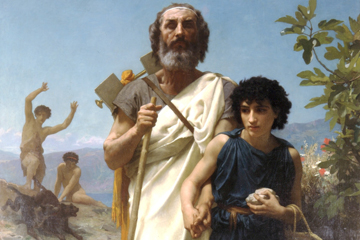
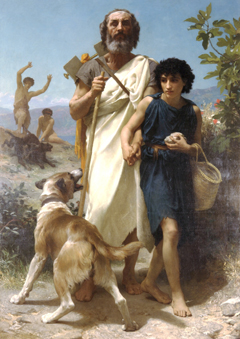
1. Homer

Any list such as this needs to begin with Homer’s The Odyssey (as does any study of Western philosophy).

No literary work embodies better how an epic voyage can be a powerful metaphor for inner travel. If its eloquent verses don’t inspire the wanderlust in you, nothing will.

Every time I’ve read The Odyssey, I’ve been overcome with the desire for all of my travels to be epic and life-altering. If you bring it along and read it often, its positive influence may also leave your own travel journal mysteriously written in dactylic hexameter.

Michel de Montaigne

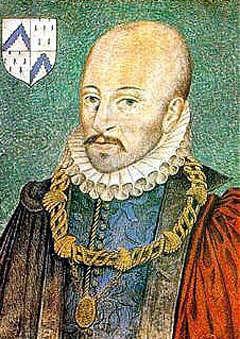
2. Michel de Montaigne

Montaigne has occasionally been hailed as “the first tourist”. Of course, his Travel Journal is a shining example as to why he’s famous for popularizing the essay as a literary genre.

Thus, Montaigne is more than just a great thinker who understood inner travel; he’s a thinker who inspired inner travel writing, too.

If you’re railing around Europe you might be interested in his various musings about regional differences throughout the continent.

David Hume

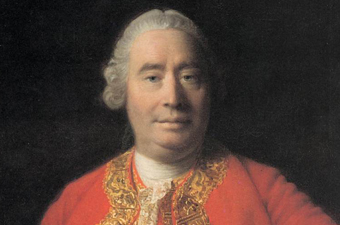
3. David Hume

David Hume was a Scottish philosopher who had a large influence on me as a young man. He was an empiricist, which means he believed that if knowledge is going to come from anywhere, it has to come from what your senses tell you about the world.

But what made Hume unique among the empiricists of his time was his skepticism. He argued that our understanding of the world is not generated through reasoning, but instead by a certain habit of mind, or more by the practicality of a situation.

Basically, this made Hume an anti-dogmatist, and he taught that we must constantly challenge our own assumptions.

His advice to the traveler would have been to always be open to new experiences, and to not get too comfortable within a limited perspective.

Edmund Husserl

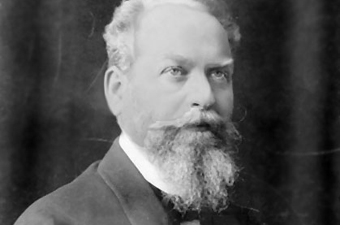
4. Edmund Husserl

Known as the father of phenomenology, nobody exemplifies the notion that experience is the source of all knowledge better than Husserl.

Thus, for Husserl, understanding inner travel would have been more than important, but fundamental.

Phenomenology is all about identifying how the features of objects are perceived, which as anyone who has experienced culture shock might tell you: it’s a life-shaking and profound process.

Husserl’s writing may seem like heavy reading on the road, but if you can parse it, there are few worldviews which declare more vividly that all of our outer journeys begin and end from within.

Jean-Paul Sartre

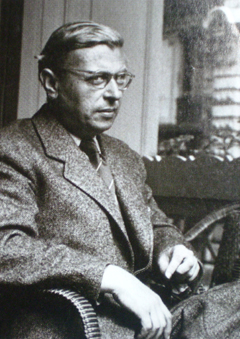
5. Jean-Paul Sartre

When many people think of existentialism, they imagine black-clothed Parisians sipping coffee and puffing on cigarettes, questioning whether their lives have any meaning.

But reading Sartre will quickly cure you of that misconception.

Rather, the tenets of Sartre’s thought empower the individual to forge in the smithy of their soul their own life’s meaning. The existentialist, like the traveler, is fundamentally obsessed with living an authentic life. And that means constantly challenging yourself to do things differently.

For Sartre, the individual is fundamentally, metaphysically open to new experiences.

For me, nothing extols and empowers the traveler’s attitude better than the existential attitude.

What other Western thinkers embody inner travel? Share your thoughts in the comments!


  • Stumble It

About the Author

Bryan Nelson

Bryan Nelson has been making up for lost time since finishing his graduate degree in Philosophy by traveling and working to change the world. Between adventure and activism, he attempts to live the authentic life, which is sometimes an excuse to enjoy good wine and free time doing nothing practical whatsoever. He currently resides in Portland.

14 Comments... join the discussion!

  • Patrick replied on November 20, 2008

    Nice list, My fav five:

    1. Socrates
    2. John Locke
    3. Baruch Spinoza
    4. Søren Kierkegaard
    5. Ludwig Wittgenstein

    (Report comment)

    ↵ Reply
  • DHarbecke replied on November 20, 2008

    Philosophy's the guide for inner travel. As far as I'm concerned, the existentialists really began to formalize the subjective experience as a thing separate from objective narrative.

    Edmund Husserl and phenomenology are natch for this list. How about:
    1) Jose Ortega y Gasset ("I am I plus my circumstances")
    2) Jean-Francois Lyotard (meta-narratives/postmodernism)
    3) Jean Baudrillard (ecstasy of communication)
    4) Richard Rorty (philosophy as dialogue, not epistemology)
    5) Diogenes (cosmopolitanism)
    6) Martin Buber (distance, I-It/I-Thou)
    7) Peter Berger & Thomas Luckmann (social constructionism – more sociology than philosophy, but it overlaps) 8) Hans-Georg Gadamer (truh and method)
    9) George Lakoff and Mark Johnson (embodied mind, metaphor)
    10) Joseph Campbell (comparative religion/mythology, but to me it leads to existential/personal philosophy)

    (Report comment)

    ↵ Reply
  • DHarbecke replied on November 20, 2008

    Philosophy's the guide for inner travel. I think the existentialists really began to formalize subjective experience as a thing separate from objective narrative: I prefer 6 billion collaborating laboratories to just a few…

    Edmund Husserl and phenomenology are natch for this list. How about:
    1) Jose Ortega y Gasset ("I am I plus my circumstances")
    2) Jean-Francois Lyotard (meta-narratives/postmodernism)
    3) Jean Baudrillard (ecstasy of communication)
    4) Richard Rorty (philosophy as dialogue, not epistemology)
    5) Diogenes (cosmopolitanism)
    6) Martin Buber (distance, I-It/I-Thou)
    7) Peter Berger & Thomas Luckmann (social constructionism – more sociology than philosophy, but it overlaps) 8) Hans-Georg Gadamer (truth and method)
    9) George Lakoff and Mark Johnson (embodied mind, metaphor)
    10) Joseph Campbell (comparative religion/mythology, but to me it leads to existential/personal philosophy)

    (Report comment)

    ↵ Reply
  • DHarbecke replied on November 21, 2008

    I was seriously tempted to write a reply saying "Yes, but are they cute?" just to see how long until Eva replied. =)

    Let's see… it's 9:10 CST now…

    (Report comment)

    ↵ Reply
  • ianmack replied on November 21, 2008

    Can we get any female philosophers on the list? ;)

    (Report comment)

    ↵ Reply
  • Eva replied on November 21, 2008

    Hey! You callin' me predictable??

    For what it's worth, I got into multiple smackdowns with the hardcore feminist crew in undergrad on the issue of inserting more female content into the philosophy curriculum. My basic position is that it wouldn't be fair to cut, say, Descartes, in favor of some female philosopher who didn't have anywhere near the impact he did. For one thing, I think it's disrespectful to the struggle to suggest retroactively that women mattered when, relatively speaking, we didn't.

    (Report comment)

    ↵ Reply
  • BryanN replied on November 21, 2008

    Ian,

    Ah, yes! There should be. Here's a quick list of 5 female western philosophers, to compensate :-)

    1. Hypatia of Alexandria
    2. Hannah Arendt
    3. Ayn Rand
    4. Simone de Beauvoir
    5. Donna Haraway

    (Report comment)

    ↵ Reply
  • Kat replied on November 21, 2008

    Great post! I am a complete novice in reading philosophy but I just love how so much ancient wisdom applies to modern every day life (and yet most of us still don't seem to have learnt from it!) .

    Have only recently read about Xavier de Maistre's attitude towards travel – interesting stuff.

    (Report comment)

    ↵ Reply
  • DHarbecke replied on November 21, 2008

    LOL Nah, you're not predictable. But you are dedicated! =)

    Isn't "hardcore feminism" kinda contradictory? It's kinda like "militant humaneness…" I know what you mean, but doesn't it start to cross the line into "masculine aggression?"

    I was in a psych class of about 20 students. The only two guys were me and this other cat who wisely kept his mouth shut, and we took the "men are all violent rapists" crap all semester. One day, while talking about male aggression AGAIN, I raised my hand asked, "If men are naturally aggressive, does that mean women are naturally passive?" If looks could kill, my troubles would be over. Not too many got what I was trying to say, but I had a lot of fun getting the room in a tizzy. All the crap I got just proved my point, and it was worth it.

    (Report comment)

    ↵ Reply
  • DHarbecke replied on November 22, 2008

    By the by – why is it, that when feminists demand the right to act like men, they focus on the worst traits? What about chivalry, honor, fairness, courtesy?

    Men's rights NOW! (No really, I'm serious.)

    (Report comment)

    ↵ Reply
  • Alex replied on November 23, 2008

    John Muir

    (Report comment)

    ↵ Reply
  • Gregory replied on November 23, 2008

    Right on about Homer! The Odyssey was the last book my ever-traveling and travel-publishing father read before he died, for precisely this reason.

    Nietzsche, perhaps the most important and influential philosopher since Plato, remains one of the greatest thinkers when it comes to exploring the depths of the inner world through his aphorisms and nihilistic reexamination of all values. But art transcends philosophy (As Aristotle, Hegel, and Nietzsche all agreed when they found Greek Tragedy to be the highest form of human achievement, and much of Greek Tragedy was based on Homer's great work.)

    Then there are the many great poets – including the great French symbolists such as Baudelaire, Rimbaud, Mallarme, and Valery – whose creation of internal mythologies (like Blake and Yeats) were self-conscious attempts to travel spiritually.

    But the list is endless: Shakespeare's world, Conrad's, Goethe's and Stendhal's notebooks, the many great thinkers from the Middle and Far East, etc…

    Thank the gods for great thinkers, writers and artists of all kinds, as they allow inner travel even when physical travel is not possible.

    Baudelaire describes the correspondence between the internal and the external world so beautifully, as he describes the eternal voyage, among other concepts in his brilliant and influential poem:

    http://fleursdumal.org/poem/103

    (Report comment)

    ↵ Reply

Leave a Comment

Jump To Category:


Explore the Community


Latest Community Blogs

  • If I were a man, I would describe this country as thus: Egypt is a beautiful woman with everything left to mystery – a...
    » posted on 6 February 2010
  • Eating a snakes heart is not for the faint hearted; in fact you really should be aware of exactly what goes on before ma...
    » posted on 6 February 2010
  • Urban parks. What are the animals in an urban park? We have the graceful pigeon: the winged vermin. We have ducks in the...
    » posted on 8 February 2010

Popular Stories on Matador

The Dude Abides: The Meaning of 'The Big Lebowski' Ten Years Later

... 

30 Funny Travel Quotes To Make You Smile

A collection of classic travel quotes to sharing lighth... 

The 50 Greatest Travel Books Of All Time

... 

8 Incredible Survival Stories

Eight of the most amazing tales of survival ever writte... 

Hostel Sex: A Practical Guide For Backpackers

Getting it wherever a backpacker can...... 

Top Gadgets To Travel With In 2010

With newer, ultralight, razor-thin, lightning-fast, adv... 


Focus


Editor Blogs

Friends