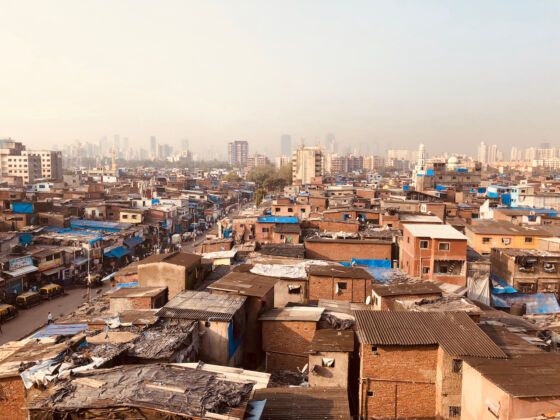
Photo: Meanest Indian
With the success of the Oscar winning film, Slumdog Millionaire, “slum tourism” is on the rise.
This type of travel, sometimes referred to as “poorism,” guides tourists through the slums of cities in India, Africa, and Mexico, among other destinations.
These tours are often run by those hailing from the West, such as Chris Way of Reality Tours and Travel, in collaboration with locals.
But what does this type of travel mean for the people who live in the slums? Hardly surprising, there is huge debate over whether or not slum tourism is ethical.
Eric Weiner adds a new spin to the discussion.
In his article “Slumming It: Can Slum Tourism Be Done Right?” he argues 4 criteria that can make slum tours valuable: (1) touring only small groups, (2) no photography allowed, (3) money being funneled back to the slums, (4) and respectful marketing.
The fact is that the controversy over slum tourism says more about tourism than it does about slums. Modern mass tourism is considered entertainment, and, of course, we find the thought of slums as entertainment repulsive.
Yet all travel is, to some extent, voyeuristic. Necessarily, we pry into the lives of others. Travel is intrusive and, really, there is no such thing as a no-impact traveler (save the armchair variety).
Previously on BNT, we’ve explored micro-loans as an alternative to slum tourism – though Weiner’s suggestions are also intriguing.
Can slum tourism be done right? Share your thoughts in the comments!
About the Author
Related Posts
7 Comments... join the discussion!
-
-
I believe that if the aim of this kind of tourism is to educate, then it could be quite progressive. Also if money was going straight to the community that is being affected by this kind of tourism, then I can see a positive side to that as well. However, both of those things are easier said then done. Hopefully the education aspect is taught to spark inspiration for change and to teach people that the causes of people living in poverty is not that simple. Also, by donating to the community, someone must make sure that the money is equally distributed or so it reaches the community in the best way possible. This is very hard to do because sometimes people get blinded by money and it ends up going to the wrong people for the wrong reasons.
Nevertheless, I don’t think slum tourism is impossible to do sustainabley, but they should also change the name (just doesn’t sound right to call it that).
I believe it was Nelson Mandela that said, “everything seems impossible…until it is done.”↵ -
I think there are ways to go about this type of tourism that can be mutually beneficial to both parties.
I know in South Africa, one can do a home-stay, where you pay a little more than it would cost to stay in a hostel, to stay with a local in a township. You eat what they eat, sleep where they sleep, and engage with them in whatever they do for entertainment. You get to see and participate in a different way of life, and you also contribute some sorely needed funds directly to a resident. There is no gawking, because you are more of a participant, rather than strictly an observer.
↵ -
I’ve seen this go disastrously wrong with Japanese tour groups – they travel through India on the pretense of “slum tourism” and actually panhandle for people who don’t recognize them as Japanese.
↵ -
Rio de Janeiro has favela tours. I see the benefit if money goes toward the people. However, it can be risky. Most of the favelas are run by drug cartels, making it dangerous. Opposing favelas have shootouts. I saw some favelas in Praia da Macumba and it was depressing to see.
↵ -
I agree, this type of tourism can be either exploitative or incredible informative and instrumental in building bridges of understanding. It all depends on how it is done. If it’s simply leading tourists around poverty-stricken slums to gawk at their plight, that’s not good. If, however, the locals are involved in leading it, showing visitors their own communities and work, participating in their own tourism, then I think it can be a wonderful thing.
There is a nonprofit organization that I profile in my book, called Salaam Baalak Trust. It was started by filmmaker Mira Nair (The Namesake, Vanity Fair) with proceeds from her movie Salaam Bombay, about street kids. SBT assists kids who are living in the streets or railway stations, and they run “City Walks” in which these very kids are the “tour guides.” It’s a really phenomenal thing.
I once took a tour of Dharavi, the slum in Mumbai where much of Slumdog Millionaire was filmed, by tour guide Deepa Krishnan of Mumbai Magic. I wrote about it here:
http://weightofsilence.wordpress.com/2007/03/15/the-slums-of-mumbai/It was a really amazing experience, and Deepa talked at length about how many visitors to India see only the tale of two cities: Poor India and Rich India. But Dharavi could show them a third India, Deepa maintained – the India of the hard-working poor, who had hopes and dreams.
↵ -
This reminds me of Southeast Asia and tours to hill tribe villiages around Thailand and Laos. Something about feeling like a representative for National Geographic has this form of tourism on the rise. One side of it shows a culture being warped by intrusion from outsiders. On the other hand, many of these groups have in the past made money from illegal opium trade and now have a more reasonable form of income. Even still, I feel that the traditional lifestyle of an opium farmer is more natural and untainted than someone putting on a tribal dance just for entertainment purposes. Tough subject to take a side on!
↵


