Why So Serious? How The Trickster Teaches Us About Inner Travel

05/18/09  Print This Post Print This Post    19 Comments   Popular   Written by F. Daniel Harbecke
  • Stumble It
The mythological trickster is beyond good and evil. They exist to shake up your world, much like the best inner journeys.
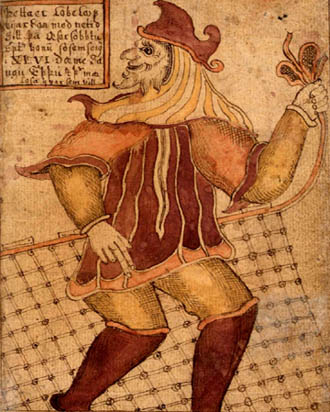
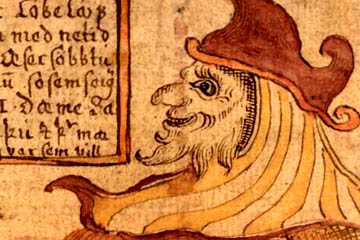
Loki, the Norse trickster. / Photo: Wikipedia

For years I’ve been on the trail of discovery. Actually, that’s not quite accurate: I’m on the trail of what it really means to discover something, popularly referred to as “inner travel.”

It’s a slow-going process – like any investigation, intuition is a faster guide than fact, but you need the facts if you’re going to extend intuition further.

You start to wonder if there really is a decent way to define it. My intuition says there is, but there aren’t always facts to back it up. Sometimes, though, I spy a parallel that helps shed more light on it – this time, in travel as an “in-between” state.

Inner travel is extremely difficult to describe, I suspect, because it has so much to do with inner meaning.

Meaning isn’t physically real. You can’t hold it in your hand or buy it from a catalog. But we do recognize meaning in physical things – concepts like beauty, truth and love find expression in art, reason and spouse.

Meaning is liminal, existing in an “in-between” place, like the threshold of a doorway. Everyone knows what love is, they can’t define it; most people can describe what they enjoy in a lover, but it’s almost impossible to explain why.

As Lou Reed might say, it’s somewhere “between thought and expression.” And so it is with meaningful travel.

How do we talk about these ideas clearly, if what’s meaningful for you isn’t necessarily for me? Answer that one, and you’re on your way to becoming an “inner travel agent.” But perhaps if we study other liminal ideas, we can get clues to the journey.

Meet The Trickster

Photo: Yvonne

In mythology, there’s one character that typifies the liminality of inner travel: the trickster. While other deities mainly act for the scheme that best benefits them, tricksters are more selfless, appearing to serve a design of wider scope.

The trickster is an archetype, or fundamental human theme. Appearing throughout world religion and mythology, the trickster causes strife or commotion, seeming to live for chaos.

What they really inspire, however, is change; they represent the fickleness of nature and “shaking things up.” While not necessarily evil, they represent a break from the shared narrative of culture. Tricksters include the gods Loki and Hermes, coyote from North American belief, the sly fox from European fables, and many others.

There are four significant traits of the trickster:

  1. They are “go-betweens.” Tricksters are able to move with relative ease among contrasting regions or levels of being. They have the power to escape order, crossing the threshold into another version of it. Hermes was the only god able to enter the underworld regularly and without difficulty.
  2. They embody inconsistency. Rather than enforcing one view of reality, tricksters support the paradox of multiple views. They follow the guiding principle of improvisational theater: you never deny another person’s reality, you only build upon it. Sun Wukong, the Chinese monkey god, could change each hair on his body into a double of himself.
  3. They have “smart luck.” Tricksters are always prepared for the unprepared because they hold their ideas lightly. There really are no accidents in the liminal perspective, only opportunities for discovery and insight: you simply play through. When Loki bet his head in a wager – and lost – he agreed to let the winners take his head as long as they don’t harm his neck.
  4. They have no home. The trickster is closely associated with the road or constant motion. Hermes is the god of roads and escort of travelers. The Nigerian trickster god Edshu walked down the road in a hat colored blue on one side, red on the other. Half the farmers would say, “Did you see that god with the blue hat?” while the others argued it was red. Edshu would further complicate matters by walking the other way with his hat on backwards!

The Trickster Is Alive and Well

Tricksters are much like travelers: they stir up controversy and discussion as unsung heroes for cultural change. They’re often unpopular or misunderstood, but they speak with an uncompromised voice and have their eyes on a more distant horizon.

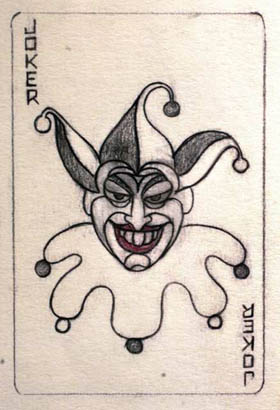
The Joker / Photo: LA Times

In his fascinating book, Trickster Makes This World: Mischief, Myth, and Art, Lewis Hyde suggests that the trickster continues to shape reality.

He points to mortal examples such as Pablo Picasso, Marcel Duchamp, John Cage, Allen Ginsberg, Maxine Hong Kingston, Frederick Douglass as liminal creators. Throughout literature, it’s characters like the Artful Dodger and the Great Gatsby, Hunter S. Thompson and Huck Finn, Robin Hood and Don Juan, who embody the trickster.

Everyone knows a rogue or rebel with an undeniable charisma, one who can cause a fair amount of pandemonium.

Yet as much as they turn things upside-down, you’re more grateful for them than words permit. The trickster is everywhere among us, and the color they fill our lives with makes them so much more extraordinary.

It’s this spirit of travel I’m trying to capture, one that’s close enough to touch but always slips from grasp. Just as it seems I’ve got the idea surrounded, it disappears and I’m left with only a short string of footprints.

But though sometimes maddening, the chase is wonderful – as liminal as the trickster gods (and goddesses) of meaning themselves. I learned a long time ago that the most alive you’ll ever be is in pursuit of that which is just outside of your reach.

The most beautiful things always are.

Dedicated to my wife Nathalie – happy fifth anniversary, moya krasivaya zhena!

What are some examples the “trickster” has played in your life? Share your ideas below!


  • Stumble It

About the Author

F. Daniel Harbecke

F. Daniel Harbecke (just call him Daniel, the F's a family thing) is currently working on "A Philosophy of Travel" which envisions travel as a metaphor for the meaningful experience of life. Daniel has lived in Europe, South America and Asia and is trying to fund his tony lifestyle in Sweet Home Chicago.

19 Comments... join the discussion!

  • Travel-Writers-Exchange.com replied on May 18, 2009

    The trickster showed up when I traveled to the UK in 2007. I arrived on time at Heathrow, but missed my connecting flight to Edinburgh. Needless to say, the people at the ticket counter were not thrilled about this. At this point I chose to go with the flow. It was my first time flying into Heathrow and had no idea what to expect. I could have gotten upset about it, but chose the “whatever” attitude. I knew that I did nothing wrong. It taught me to stay calm, cool, and collective. It wasn’t a big deal.

    (Report comment)

    ↵ Reply
  • Ian MacKenzie replied on May 18, 2009

    Immediately upon reading this, I thought of Heath Ledger in The Dark Knight. He’s the embodiment of the trickster. He has no agenda, other than to be an “agent of chaos.” The real feat of his character was that he was both fantastically alive and a sociopathic monster at the same time… the trickster sacrificed his sanity for the sake of shaking up others.

    (Report comment)

    ↵ Reply
    • DHarbecke replied to Ian MacKenzie on May 18, 2009

      The Joker personifies the archetype of the trickster. The trickster crosses over into evil when he or she, as a sentient creature, ceases to relate to other sentient creatures. That happens a lot with gods who often seem completely indifferent…

      Here’s the $10,000 question: what if the Joker was sane?

      (Report comment)

      ↵ Reply
      • Ian MacKenzie replied to DHarbecke on May 18, 2009

        Depends how you define “sane.” :-D

        (Report comment)

        ↵ Reply
        • DHarbecke replied to Ian MacKenzie on May 18, 2009

          Here’s the problem: immorality and sanity aren’t the same thing. We tend to assume the most heinous acts can only be the product of someone who’s a few Legos short of a castle. But these days, sanity’s a legal concept, not a psychological one. In popular parlance, it describes someone whose motives we can’t understand, or are completely out of synch with motives we consider rational.

          I don’t believe the Joker was insane. Criminal and amoral, yes. In the Dark Knight movie, he understood other people’s motivations well enough to be one step ahead, if not several.

          Assuming the Joker was sane, it leads to another question: is order a product a chaos, or a breakdown of order? It’s kind of a chicken-and-egg dilemma. I prefer to think chaos is the medium which promotes order, and in social dealings pure chaos isn’t possible.

          Unless everyone’s crazy. :)

          (Report comment)

          ↵ Reply
  • Tim Patterson replied on May 18, 2009

    Great to read more of your thoughts, Daniel! I always travel with a little magic trick in my pocket – helps break the ice.

    (Report comment)

    ↵ Reply
  • Carlo Alcos replied on May 18, 2009

    Daniel, always great to read your posts…this one quite deep! Was it intention to make the article like the trickster? Just when I thought I was starting to understand, it slipped away from me. That’s brilliant!

    Is it that we shy away from convention, question the givens, and are often misunderstood? Does that make us like the trickster? Or is that the trickster’s influence on us?

    And by the way, not EVERYONE knows what love is. Mick Jones from Foreigner wants to know what it is. And he wants you to show him.

    (Report comment)

    ↵ Reply
    • DHarbecke replied to Carlo Alcos on May 19, 2009

      Most of my articles have multiple levels, and they do tend to get a little deep. That’s part of what I’m after. I want to give more levels to an idea once you grasp the main one. It’s like going to a new city: the more you pare away, the more there is to see.

      Related to the trickster, I like jokes that make me laugh on the surface, but make me ask: WHY did I laugh at that, how does it work? Likewise, I appreciate topics that explore a given topic on the surface, but are written so they can be applied to other areas. Give me an article that points to something we don’t know, and I’m a happy man.

      Regarding your question about avoiding convention, I think for the most part we prefer it. When we travel, we’re looking for ideas and parts of ourselves that are hidden. The completely alien we reject because we can’t relate to it, but the trickster is right on the threshold of it. They represent the existential frontier between where we can find meaning and where it is lost.

      A shaman, or holy man of primitive cultures, undergoes a psychotic break when they cross that frontier, and then a reintegration (at least partially) so they can function as people again and impart spiritual wisdom to their tribe. The same thing can happen with artists, who today serve the role once provided by priests and shaman, but really it’s a journey that’s open to anyone daring enough to take it. But it’s a dangerous trip – you must be prepared for it, or you may not come back!

      (Report comment)

      ↵ Reply
    • DHarbecke replied to Carlo Alcos on May 19, 2009

      I’d like to add – yes, we’re all tricksters. And as for Mick Jones, it’s not a bad arrangement, because his groupies want to know what love is, too. So it all works out.

      (Report comment)

      ↵ Reply
  • joshywashington replied on May 19, 2009

    ever dance with the devil in the pale moonlight?

    (Report comment)

    ↵ Reply
    • DHarbecke replied to joshywashington on May 19, 2009

      Yes, but I lead. She also does my taxes.

      (Report comment)

      ↵ Reply
  • Greenygrey replied on May 20, 2009

    Some people consider the Greenygrey a trickster

    (Report comment)

    ↵ Reply
  • Gregory Hubbs replied on May 25, 2009

    Nice piece Daniel,

    As one who has traveled since birth and studied philosophy (and its more profound Mother, poetry/literature, in my view), I think that travel experience is as much imaginative as it is physical. For example, 19th century symbolist poetry of Baudelaire, Rimbaud, Mallarme served as the basis of much of the pop culture of the 60’s and its subsequent imitations, as well as the archetype for most subsequent 20th century poetry and art, etc. The creation of mythologies in bodies of poetry based upon classical gods such as Mercury and Apollo placed the imagination at the center of all thought, since not only does travel engage the Imagination but Imagination is made more fertile by travel.

    Imagination is the ultimate trickster and that is why it is not always necessary to physically travel to experience similar epiphanies. That is why music from Africa and Brazil can send the soul into Dionysian frenzies and Apollonian visions. In my view, that is why the greatest artists travel in their imaginations as much as they do in reality (see the life and poetry of teenage genius Rimbaud, or the notebooks of Leonardo Da Vinci).

    (Report comment)

    ↵ Reply
    • DHarbecke replied to Gregory Hubbs on May 25, 2009

      Thought-provoking reply!

      You mentioned symbolism, but consider also the rationalist approach. Goethe’s two poems, Prometheus and Ganymed, depict another angle of what you describe.

      Prometheus embodied rebellion and self-assertion; Ganymede, the love of protection and familiarity. Since the one follows the other, it’s meant to represent the pendulum swing of adventure and restoration – or, in our context, travel and homecoming.

      Joseph Campbell’s Hero Monomyth captures the pattern in mythic detail. But I very much agree with you: myth and art are attempts to give a face to the transformative experience.

      Thank you for your comments!

      (Report comment)

      ↵ Reply
  • Kate replied on July 23, 2009

    Robert Holdstock’s series of Mythago Wood books have depictions of trickster within them – within the broader theme of universal Jungian ‘myth images’. The books can be read on several levels and also explore whether the trickster is an internal or external force. They’re a good read anyway.

    (Report comment)

    ↵ Reply
  • anti_supernaturalist replied on October 12, 2009

    ** Out on a liminal?

    Archetypes — Jungian?
    meaning — meaning what? what meaning?
    liminal — indeterminate? in between? barely perceptible?

    If you expressed yourself more clearly would that help?

    (Report comment)

    ↵ Reply
  • DHarbecke replied on October 12, 2009

    I’m sorry this wasn’t clear enough for you. I didn’t want to complicate the article with needless jargon or philosophical overcomplication, I thought by the context the definitions would be evident. But since you ask so nicely:

    Yes, Jungian or psychological archetypes. Trying to fit the generic definition of archetype into this position would be going out of the way to be difficult, though not impossible if you ignore the example of the Trickster. Which you did.

    Meaning as in “personal valuation or significance”, as in the example given by personal worth of a lover. Not semiotic, not linguistic.

    Liminal, from the multiple choice you offer: a) indeterminate. Again, elaborated on in the “between thought and expression” description, not to mention the remainder of the article (the other options won’t make sense).

    I hope this clears up any confusion. This article is meant for a general audience – a grad-level elaboration of these topics is not required. Sure, I could have laid it on much thicker, but I don’t care to alienate readers by flexing vocabulary.

    Please let me know if you need any additional hairs split.

    (Report comment)

    ↵ Reply
  • ffilou6 replied on November 25, 2009

    I thought about the Trickster in TV Series ” Supernatural ” :-)

    (Report comment)

    ↵ Reply

Leave a Comment

Get Matador in your inbox and around the web.

Sign up for our FREE weekly newsletter.


View full list of RSS feeds

Jump To Category:


Popular Stories on Matador

What Is The Decade's Best Gadget?

Take a wild guess...... 

Where to Find Righteous Pizza in Atlanta, Georgia

Specialty pies include The Chicken Cordon Bleu, which s... 

Grow Some Moss in Your Bathroom

A soft grass carpet that thrives from the few drops of ... 

Tips for Travel Video: Framing the Action

What's the easiest technique you can use while filming ... 

A Traveler's Secret Way To Save Gas Money

You rely on public transport while traveling. Free your... 

Crashed Ice is Coming to Canada

An incredibly fast race that mixes downhill skiing, hoc... 

13 Ways To Avoid Jet Lag

... 

Photo Essay: 20 of the Freakiest Custom Bikes on the Road

For those out there who think bikes are nothing more th... 

Monday Mashup - Human Journalism

This week we look at a new way of engaging people and p... 

A Meditation On Washing Dishes

Dirty dishes: the ultimate symbol of household drudgery... 


Focus


Editor Blogs

Friends