Photo: Azriel Cohen
When we travel and think about expanding our awareness to understand other cultures, we are referring to “human” culture.
Most of us are not thinking about the culture of other-than-human-life.
I invite you to do exactly that – consider other-than-human cultures as part of your travel explorations.
Conscious travel can help, in little drops, to make our world a better place. Traveling to new cultures, we can advance the understanding between peoples who are different, bringing a bit more peace to our world.
Through opening to animal cultures, we may be healing a root cause of the ecological crisis.
Some environmental thinkers are convinced that the most fundamental difference between modern and indigenous societies (such as Native Americans, Amazonian tribes, Maoris, and Aboriginals) is that indigenous societies believe as an absolute fact that humans have the innate capacity to communicate with animals (and plants!).
It is no wonder then that ancient cultures have a remarkable degree of respect for all life. Experiencing all animals and plants by being able to communicate with them would make it much harder to severely damage the environment.
Developing A Theory
I began to wonder if this really is a long lost human capacity and not just a superstitious ancient world view. The best way to explore this, I figured, would be to personally experiment.
Photo: Azriel Cohen
I reasoned that if communication with animals is an innate (albeit long lost) capacity that all humans have, the implications could be enormous.
First of all, it would mean that I personally could access this capacity. I began my explorations as a complete skeptic, quite certain that I could never communicate with a wild animal.
But I was brimming with curiosity, and at the very least I’d have some interesting adventures.
Secondly, if our “normal” state includes communicating with other living beings, we would need to be tuned into something other than our normal communication channels.
As far as we know, animals don’t share our higher capacities for language and reasoning. The channels where we could meet animals have to be with the more “primitive” aspects of being alive. These include physical and non-verbal domains.
In order to communicate with animals, we’d have to shift our moment-to-moment experience of ourselves, mostly in ways of how we experience our bodies. This could mean that through rediscovering how to be in relationship with animals, we might discover a different, perhaps older and more natural, way to be in our own bodies.
Humans have individual states of imbalance (animals don’t need doctors or psychologists) and collective states of imbalance (such as war) that are non-existent among undomesticated animals.
Animals possess an innate capacity to return to health and balance, and consciously interacting with animals can assist us in tuning into our own “zone” of balance and harmony.
Thirdly, if indigenous cultures live in a zone or frequency that is in relationship to the other-than-human-life forms, it would be possible to observe that they have different ways of “being,” such as how they move, sit, walk, talk, make eye or physical contact, than modern cultures.
In short, these cultures would feel different. It would not be a theory. It would be something that we could experience when we were around them.
Experimenting With Communication
I spent time with Native Americans in North Dakota, with the Bri-Bri tribe in Costa Rica, with Bedouin in the Negev desert in Israel and Egyptian Sinai, and old cultures of Zimbabwe.
Photo: Azriel Cohen
Indeed, they are different from “modern” people in how they move, sit, walk, talk, make eye contact and physical contact.
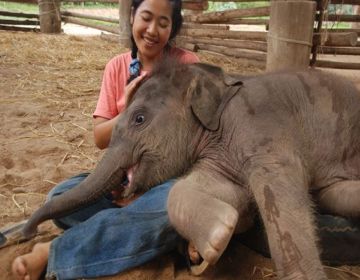
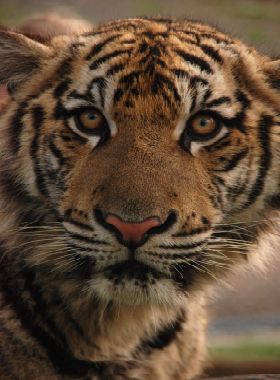
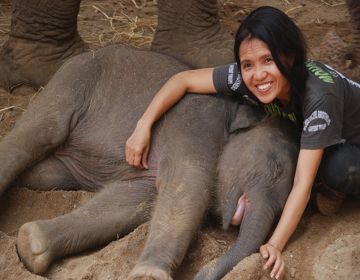
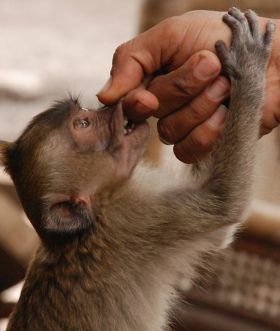
During these eclectic travels, I found myself around wild animals such as birds, lizards, wild deer, monkeys, elephants and baby tigers, and experimented with non-verbal domains.
I focused on the most “primitive” aspects of being alive – my breathing, heart rate, muscle tension, how my eyes focused and the most subtle physical sensations.
Wild animals absolutely responded to my experiments with shifting these physical aspects of my being. In many situations, it led to the animal feeling safe enough to make physical contact.
There is a “zone” that is natural for us, but rarely experienced in the modern world, that animals and indigenous cultures can help us reconnect with.
In that zone, we are often less verbal, often slower, often more “intuitive” and always more tuned in to what is going on within ourselves and around us.
There’s a state of exquisite connection with all living beings that is ours to rediscover.
Have you connected with a wild animal on a primitive, intuitive level? Share your thoughts below.
About the Author
Related Posts
38 Comments... join the discussion!
-
-
Fran, I’m fascinated by your actually speaking to animals. Could you clarify what you actually did and also share how you felt? From what I understand, it may be that animals experience the state of our nervous system, the quality of our voices and perhaps even the images in our thoughts, rather than having any sense of the words we are using.
It is remarkable that your comment is the first response to this article – because my first unexpected experience with wild animals was with bears (a mother and three cubs!) just after my first encounter with Buddhist meditation. I used meditation in the presence of the bears. It’s a great story. I intend to share it in a follow-up article.
↵ -
Certainly puts Biblical story of Eve & the snake into a whole new light. Perhaps we’ll try asking the snakes and coyotes out here to please leave our chickens alone. My husband conquered his phobia of bees by finally asking a hiveful of them perched at the entry to his home years back to please leave him unharmed. Before making a major overseas move, I was visited by 5 wild animals (owl, possum, coyote, snake, bat – in my bedroom no less) in and around my LA suburb home in the matter of a week, as if to bid me farewell. I am fascinated by this article because I come from a culture where women particularly are incredibly fearful of all animals, including most pets. I am inspired and look forward to opening my eyes, heart, and senses to new relationships with the wild! Thank you, Mr. Cohen.
↵ -
I agree that there are implications for interpreting the story of the Garden of Eden – an embedded message there was a time when the relationship between humans and animals was very different.
I have touched on non-verbal communication with animals and wonder if the stories you share involved verbal communication.
↵ -
Nice post. Many have forgotten that we are part of the whole picture and do not dominate it or control it. We are part of nature, just as all the animals and plants are. The world is on a collision course mainly because we are too self-serving.
In the book Ishmael, Daniel Quinn says that there are fundamental laws, just like laws of physics, that govern the way we (and other animals) have to live to survive. In a nutshell, it’s to respect the natural balance…by competing to survive, but not by waging war or denying others access to the things necessary for their survival. Since we’re not living by this “law”, our civilization is doomed unless something changes. Just like you can’t escape the law of gravity, you can’t escape this law either.
We are very connected to all living things, we can’t forget that.
↵ -
Thank you, Azriel, for this contribution to a deeper understanding of the world in which we live. As my own understanding has deepened, I view all interactions with other forms of life as a teaching. Perhaps my most profound, to date, involved a small chameleon.
One sunny, winter morning in the countryside of South Carolina, I was taking a walk when I was startled by the movement of a small chameleon, a member of the lizard family, as he (she?) sped across the dry, brown grass about 5 feet to my left. I felt very surprised, as though I had never really seen a chameleon, even though they are very common in that environment. I stopped and looked at him in amazement, and when I did, he stopped. He was now about 5 feet in front of me. I don’t know why, but standing perfectly still, I found myself saying aloud, “Well, look at you. Aren’t you so beautiful.” I remember feeling affection and a kind of tenderness, like one might have for a human infant. As I spoke, he looked at me, turning his head this way and that. Then, he turned and ran toward me, stopping about 3 feet to my left. As he moved, I squatted on my heels and rested my chin in my hands and my elbows on my knees. I looked at him. He looked at me, turning his head in that questioning sort of way lizards have. I don’t remember thinking anything. Time seemed suspended. Suddenly, he ran directly to me and jumped onto my left shoe. (I was wearing closed-in shoes, socks, and long pants.)
As I looked down at him in awe and wonderment, he looked up at me, still turning his head, as though he wanted to ask me something.
Suddenly, he leapt onto the top of my right shoe! And, as suddenly, the idea came into my head, “If he runs up my pants leg, I won’t be able to tolerate it!”He was gone.
That 2 inch primitive form of life gave me a teaching as great as any I have ever received from the wisest human teachers. He showed me what can happen when Love and Non-Fear are present in me. I can connect in the most wonderful way. He also showed me how Fear prevents and destroys connection. He showed me the incredible power of my THOUGHTS. I now have a Buddhist practice, and have learned through the Buddha’s teaching that thoughts are extremely powerful, and that I create my experience and contribute to the experience of the collective with my thoughts (sometimes, followed by words and body action).
Who knows, maybe the Buddha learned this from a Chameleon.

Thank you, Azriel.↵ -
Thank you Trish.
A doctoral student who researches animal emotions told me a few days ago that lizards lack the capacity to connect socially as we do, and that some pretty out-there experiences I had with lizards were almost certainly just my interpretation.
But I spent time a tribe in Costa Rica who medicine men communicate with iguanas to receive information. And now we have your story too.
This is the big question: Who is right – the Western scientist or the indigenous person?
↵ -
I met Azriel this week while teaching yoga at Agama Yoga here in Chang Mai, Thailand, but little did I know that he is THE Azriel from Holy Cow – one of my favorite travel story books about India! After looking at his photos I realized he had some truly amazing shots of elephants interacting with people taken from the Elephant Nature Park & other animal photos. I mentioned that these were ‘prize-winners’ & needed to be published! That was two days ago…now…shazaam…they are!
I find the ideas in his article very interesting indeed. It reminds me of the Native American mythologies & beliefs in spiritual connection of all animals. “All my relations,” as many say. Many tribes in North America believed & still believe that when an animal crosses your path, there is a great significance. If you are walking in the forest and a deer comes your way, it is a sign of gentleness (meaning you need to be more gentle with yourself or others). If a bear finds its way to you, it could mean a sign of needing introspection (bears are masters at being introverted with all that time hibernating & conserving energy). In the old days especially, a medicine man (or woman!) would tell you the whole story of the meaning behind the animal that gave you a message by coming your way.
I have also been experimenting with interacting with different body language around animals, but not with wild animals…these little dogs so popular in Asia that want to try & tear my ankles off!
↵ -
I’m looking forward to your stories from Thailand also!
↵ -
On my way to Fort Berthold, a Native American reservation in North Dakota, I encountered a deer.
I spoke to one of the elders in the community about it.
He interpreted the meaning behind the experience. Just like you say.
I hope to write more about Fort Berthold in upcoming articles on this same subject – I encountered people who experience dimensions of reality almost no modern humans are tuned into.
↵ -
Azriel,
This post offers wonderful insight on the need for travelers to move beyond a mind set of domination of animals to one of respect and understanding. Animal-human communication could very well help preserve the environment, but it will most surely bring much-needed balance to the human perspective. Such a shift will help animals and people alike.
↵ -
Hey Azriel,
Great article. Thanks for bringing it to my attention and nice to be back in touch with you. I’d love to hear more of what you’ve been discovering in this exploration. It reminds me of the work I’ve been doing with Reggie Ray (http://www.dharmaocean.org/default/index.cfm/vision/reginald-a-ray/) here in the states. You may be interested in his take on the somatic basis of meditation practice and how it relates with the natural/animal world. We do a lot of our practice out doors at our center in Crestone, CO. I recently had the extraordinary experience while practice meditation in the the woods outside our center of having five deer come and encircle me for 45 minutes. It was pretty astounding. Much more to say about this….
Keep me posted on your travels and thoughts.
Best,
Jim
↵ -
I live in Chiang Mai and found it very informative. Thanks.
↵ -
Azriel,
Thank you for sharing your thoughts so clearly and articulately. Before I left for Israel this past year, I began reading “The Spell of the Sensuous” by David Abram. It inspired me to make a conscious decision to connect with all the wildlife while travelling around. Through this conscious connection I was able to reconnect to an expanded mind; one where the awareness of our interconnectedness was evident and the experience of being part of one large organism is palpable.
Having grown up in NYC but having had the fortune to travel all over the world and spend time learning and being with indigenous peoples such as the Bedouins you mention in your article, I often wonder what is their experience like in the cities.
Thanks again for your article. I look forward to reading more.
Blessings.
She with many names
↵ -
Jan-
Right on! If I had to compile a list of best books on this topic David Abrams’ “Spell of the Sensuous” would be right at the top.
I too have often wondered about the experience of indigenous people who have been moved to cities. I’ve wondered what it feels like via their eyes and hearts.
I imagine that some of them experience a degree of shock that is beyond what we can imagine. What do you think?
↵ -
This is really lovely, Azriel. Thank you for writing it, and for being on this journey, with and for everyone.
During my time in India, I found myself much more closely connected to animals, as the divisions between domestic and street animals, tamed and wild are much more flexible and open over there still…
I have been wanting to write a series of books for children, retelling the stories of interactions I’ve had with animals there, as a way to connect new generations with just what you are saying. I believe that if we are personally connected with animals, communicating with them, and recognizing them for the immensely intelligent and loving beings that they are, that it does transform the way we are on the planet, and what is possible for the future, for all of us.
Thank you for that confirmation.
With you
Dara↵ -
Right on! Expanding our awareness and consciousness to include non-human life as we “travel through life”. I love it!
I really appreciate this take on “traveling” to other “cultures”, and this take on environmentalism, and this take on getting to know ourselves.
Anyone who has ever spent time getting to know and loving a dog, a cat, a bird, etc. can easily relate to what you are proposing. Reminding us to connect in the same way with all life forms, wherever we go, as a way to connect with our deeper selves and with the greater whole we are all a part of is brilliant Azriel.
Thank you! Keep sharing, please…
↵ -
Thanks Azriel. Your article has given me a whole new dimension to think about that I never really considered before. I have been travelling nearly four years and am still learning to look at the world in a new way and this article is another example of a really useful ’signpost’
Ray
↵ -
Shalom Azriel. I enjoyed this article. I echo zak’s comment that we don’t need to travel to exotic places to have these experiences with animals. I communicated with a squirrel in my mother’s yard in Amherst, MA today. Also, any one who lives with a cat knows how they respond to muscle tension, eye contact, breathing, etc.
My cat knows when I am fully present and when I am stroking her only half-heartedly with something on my mind. If she is lying on my chest, she knows when I am going to get up before I even move a muscle. She feels the energy shift. So there is a lot we can learn from our relationships with domesticated animals as well.
Keep up the good thinking and writing,
Amita↵ -
Azriel,
Great article, but so short! I am intrigued. How specifically did you alter your breathing, your movements to communicate with the animals? How long did it take before they trusted you?
And were you communicating specific messages, or was it more about general feelings of trust?
I look forward to reading more.
↵ -
Hi DC,
Hope you are reading the follow up articles about animals cause they are answering your questions – the new one is How to Put a Baby Elephant to Sleep and there will be more…getting into more depth and detail about the techniques to engage with wild animals.
↵ -
Hi Azriel,
It was a pleasure to read your article about communication.
I think I too should search for those innate abilities.
My efforts with humans here in Kabul are too often fruitless.Best
David
↵ -
So important to reconnect with the (other) animals on this planet! I so well remember the lizards and insects and sea creatures that were part of the enchantment of traveling when I was a child. Now too, it’s often the ibex or miniature deer or snowy egret that I remember best from my vacation travels. Perhaps communicating with animals abroad will lead to respecting their needs and habitats when we are at home.
↵ -
Your article is really terrific. I am usually afraid of wild animals and never thought of being able to communicate with them. This is a very old fear related to my original family’s orientation of being afraid, in general, of anything or anyone different. I have, however, dreamt of communicating with wild animals from time to time, though my experience has only once put me in their vicinity: a camping trip where there happened to be bears and coyotes. The remarkable thing was that I was not afaid, but looked forward to meeting them, which did not -fortunately or unfortunately- happen.
I thank you for your article, Azriel as it reinforces my belief that we are not so different from our fellow human or animal beings and makes me less afraid, a wonderful gift.
↵ -
Hey!
At the moment i am 17 years old doing and exchange in germany for a year and looking for idea for my next adventure. I have just looked through your blog and i am absolutley amazed with the experiences you have been through and would love to be able to go through the same.
do you have any advise on how i can do this?↵ -
David Bohm, ex-colaborator of Einstein, a genius forgotten, as was Copernic in his days, Galileu, etc etc the usual stuff, has this theory that he called Holokinesis, it can be said as Holokinetic Physics, its the new upgrade in Physics and you can read his book, fascinating book, where he talked and explain his Holokinesis.
So, as Bohm said, there exists two orders in the Universe, an Implicit one and Explicit. Holokinesis is the movement from here to here (a new paradox in movement) from the Implict Order and the Explicit one. Its a movement of enfoldment and unfoldment. The Implicit is the basis, the ground, the sea of energy where anything born, its multidimensional, there are no way to measure totality, because you need two points to measure, the Implicit can be infered by some experiments in Physics like the Bell Theorem and the E.P.R. ( Einstein, Podolsky, Rosen, designed by Bohm) experiment, where they say that the Universe in One Unity, all conected NOW, there is no space and time, its imediate.
So, if everything is the Universe as a Ground where everything borns and everything goes when dead, its natural to assume that we and the “other” animals, have a common and subtle conection, wich can be Universal Mind. So when we look at an animal, the Universal Mind is seeing himself, thats what connects us, we are not separate, its like, we are One beeing. And we can only perceive that, when we are in TOTAL peace, in a Silent Mind without language, thought. Universe is in Silence. Thats the Ground. I ( not the ego, but the human body that have my name) can actually say that with a tree, a flower, a stone, we have something in common, in a very very deep way I am the tree, the flower and the stone.
The great of this, its that it isn’t mysticism, it can be proved by science NOW in tohe experiments I talked above.
So, these experiments mentioned don’t suprised me. Actually its our heritage, our true heritage.
And we can perceive that in Unitary Perception, what Krishnamurty said as Meditation. The Universe is in a state of meditation. And UP its a brain function, recovered this century by Krishnamurti, Bohm and Ruben Feldman Gonzalez. Ruben had created a new Psychology based in his talks with JK and Bohm, and that he called Holokinetic Psychology, in memory of Bohm.
The only way to get contact with Holokinesis is in U.P., consciously. Without time, right NOW, its available for us, its our brain.
If you’re interested go to http://www.unitaryperception.com and you can download Rubens books for FREE, he don’t charge any money for his books.Blessings to you all, we continue connected

Peace!↵ -
Hi Azriel,
Intriguing line of thinking indeed. Hope it’s taken forward and we get to experience a new spectrum.
Hope to read more
Regards
Sachin
New Delhi (India)↵ -
Azriel:
These are important ideas you are expressing! Hope thatr you keep exploring these themes further.
Cheers,
Gary
↵ -
Thank you for this beautifully written and thought-provoking article. I would caution people seeking experiences with wild animals to use sensible caution. A close friend’s daughter was mauled by a lion in S. Africa while participating in a safari “lion meeting experience.”
The experience I’d like to share is with a very small form of wildlife: roaches. When a neighbor fumigated, the roaches packed their bags and moved into my apartment. I did not want to use poisons to get rid of them, so I tried a number of alternative methods. Nothing worked. Finally, I decided to pray. I asked God to send those roaches packing elsewhere. In a short time (after about three years of suffering with them) the roaches disappeared, never to return! Thank God – truly.
It did not occur to me to speak to them directly, but after reading Azriel’s article, I would try it!
Jolie Greiff
Ramat Beit Shemesh, Israel↵ -
I thoroughly enjoyed your article and have been thinking in a similar way for a long time. I so appreciate your giving voice to this process of human-animal relations. In visiting your website, I also noticed that you, like myself, are a certified somatic experiencing practitioner (www.traumahealing.com). My experience has been that this healing process seems to enable practitioners to enter a zone of embodied knowing such as you mention in your article.
I completely agree that we need to explore what I call “anthrozooecology” or the interrelationships between human beings, animals, and their ecosystems, and human perceptions of these interrelationships. In fact, I have an upcoming expedition to South Africa (http://www.perceptionintl.org/izilwaneafrica.html), which will be exploring the interconnection of ancient African lore held by shamans, inter-species communication, and the white lions of Timbavati.
I see this anthrozooecology as being related to the concept of perceptual diversity, which states that perceiving reality through many different perspectives allows human beings to better understand, interact with, and develop a closer relationship with other species, nature, and the universe as a whole.
Shifting how we see, sense, and experience the world affects not only our perceptions but also our actions. This shift allows us to fully experience our interdependence with our global ecosystem, and, thus, “know” that we are an integral part of nature. This enhanced awareness then can lead us to more innovative solutions to the environmental problems facing the world today.
The experience of “communicating” with animals comes from entering a zone of sensing with our body and quieting our “rational” human mind. As an anthropologist who has lived with indigenous peoples for many years, I have come to the conclusion that “communicating” with other species, even plants, is an embodied experience rather than a cognitive experience, just as you state.
Unfortunately, many–and I would venture to say that in this day and age most—indigenous peoples no longer are able to communicate with other species. Have you, too, found this to be true? It is usually the older shamans who have retained this skill. It’s very easy to romanticize indigenous peoples, to project upon them that they are “noble.” Data, however, reveals that prehistoric humans were probably the cause of many species extinctions, including horses in North America. Perhaps what we need now is to progress beyond the abilities of shamans and mourning for the lost past toward a “modern” anthrozooecology that so far has yet to be seen in human beings. Perhaps this is the next step of evolution that will lead us as humans to prevent the Sixth Great Extinction that is currently underway.
One other thought, my experiences have been that wild animals actually do experience trauma, although perhaps differently from the ways that we human beings do. It appears to me that wild animals do not tend to “blame” themselves, each other, or other species for any trauma that they suffer, although even this is debatable, particularly with chimpanzees. After all, chimpanzees have been documented by Jane Goodall to go to war. And I have seen animals in the wild that appear traumatized such as a Thomson’s gazelle at a water hole with a broken leg that clearly seemed to know it would soon die, although I could be charged with anthropomorphizing here.
In addition, I feel that the entire global ecosystem is now “experiencing trauma” in a way that is entirely new. Again, this is something I sense, a type of embodied knowledge.
I hope these reflections encourage more dialogue on this fascinating topic.
Tara (Taos, New Mexico and Washington, DC)
↵ -
Thanks Azriel. Reading your article, I started reminiscing about a time when I learnt a lot from a duck in a park…think it was the first time I understood experientially what it meant to inhabit my body differently.
I had recently been listening to ‘The power of now’ and had just heard the part about how animals never hold tension in their bodies for long. Eckhart gives the example of a male duck who has a fight with another duck to win the attention of a female. He loses, and immediately shakes his body furiously, ruffling all his feathers – and in this way frees himself from the aggressive energy of the fight. Then off he swims calmly, as if nothing had happened.
As I walked past the lake in the park, I saw this very thing happen with my own eyes, and then realised that I too could choose to do this. Instead of holding onto experiences as stored tension within my body, I could consciously let them flow through, ruffle my feathers, and continue my way.
I’m wondering now, that maybe as we learn to relax more and more deeply, letting life move through us in this way, if we’ll simply open ourselves to a realm of experience where communication, beyond words, will be effortless with all of the life around us? As well as bringing about a gorgeous atmosphere of health in our being. Hmmm.. thanks for the food for thought, looking forward to the next article
↵ -
Hey Azriel,
Thanks for informing me about this well crafted article.
Captivating, moving
Thought provoking, inspiring
Mind expanding
Take a chance and try
communicating with other beings
in our world
and out~Steven
↵ -
I think animals are all individuals and worth trying to get to know, and it can make a quiet day on the road a bit more interesting too.
Like humans, some are friendly and engaging, making eye-contact or more, while others are shy.
Whether they bring messages or listen to our thoughts/words I don’t know, but they are worth preserving anyway, just because of their sentience and what they give to the world.
↵ -
Dear Azriel,
Your article made me think about where are we, humans, going to. At a certain point, humanity decided to walk a solitary path away from the rest of the inhabitants of this world and that decision is also leading us to killing our environment and also our own survival.I do not know if now we are able to talk again with other animals, but I am sure that we could in the past because we share the same origins and probably we still have that skill in our genetic memory and can be reactivated. And if not so, there is something that we can do which is to practice our capacity of understanding who we are, body and mind, to bring togetherness to our relationships, both with ourselves, with our human peers and with the rest of the living creatures around us.
I think it is not easy to take that step towards regaining unity when we have been taught to despise the ‘wild’ part of our nature, so bringing also a sense of destructive detachment from wildness everywhere else in the planet. In fact, the mention of the word wildness reveals the ancestral fear to lose control, something that takes over us and gets away our humanity when in reality wild life has nothing to do with lack of control.
But somehow I have confidence in that we will become aware of the necessity of recovering our internal and external unity, because we need to revive old ways of communication that will make us more human by acknowledging our animal nature.
It is not by coincidence that the areas that are considered most ‘advanced’ are also those where wild animal life has been almost completely eliminated. Is it not a signal of the obliviousness in which we have left our internal wild life?
Please, Azriel continue exploring and keep us updated
Marijo↵ -
Hi Azriel
Wonderful article, thank you for this. I am blessed to work with animals in this way as a career. As a child I was always aware that animals could “read our minds”. They always knew when I was sad or sick or lonely. It was only as an adult in my early thirties that I discovered that we can actually understand them in the same way. It is indeed a natural ability that we as modern humans have forgotten. Through our conditioning and belief systems we have contracted the great separation sickness, which I believe every human on this planet feels the pain of on some level, even if they are not consciously aware of it. People are slowly waking up and I truly believe that the only way to save the planet (or rather ourselves) is to be consciously aware of and in tune with the other beings whith whom we share the beautiful Earth.
↵ -
The central narrative of Western civilization tells humans that they are lords of the planet and can do whatever they want with it. Indigenous peoples have been spared that pathological advice, and people like you work to transcend it in your own way. When I imagine humans living in and with nature rather than over it, I get glimpses of what I think you are doing.
↵ -
thanks Azerial.
I loved the article, it inspires me to think in new way about our relation to animals, it might be quite difficult for me to understand this relation very well because im not in contact with animals on a daily basis, but i can understand some of what you wrote about the connection,
this reminds of guy who was hired to work in my uncle land in Shufat village not far from Jerusalem, and one day while my uncle was away from the house, his dog was barking and crying, so i looked out of the terrace to see whats wrong with him and i saw that the guy who works for my uncle was beating him violently, i screamed on him to stop that and it was stopped but the dog was already bit like hell. and then when i talked to the guy about his act he said that he quit the cigarette days ago and he was angry and want to load off and bit the dog.
its noteworthy that not in All Arabic cultures animals are respected, but those who raise cattle and birds and pets, they behave different in their daily life with others, I remembered how we held funeral when my son’s piny pig died in the cold snowy day in Jerusalem.↵