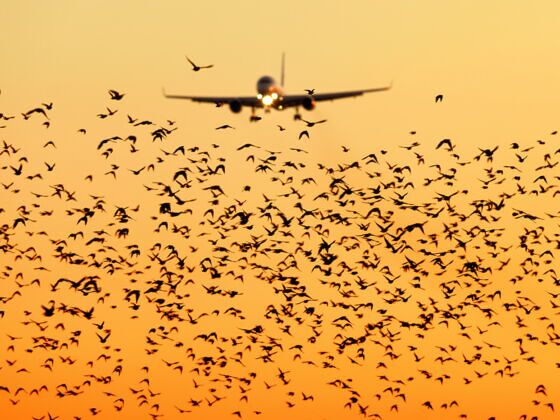
Dreamers / Photo: withanyluck
“You shouldn’t move around so much. Did you know that take-offs and landings are the most dangerous parts of flying?”
A mother once said to her giddy eight-year old daughter, who was swinging her legs wildly, to somehow calm her down as the plane began its ascent.
Those words haunted me since.
I was born traveling. I was a fetus when my mom rode the plane to the US, and a month-old baby when she brought me back to Manila, Philippines, my hometown. My parents loved going abroad, and they took me and my younger siblings everywhere at least once a year.
It used to excite me as a kid to watch the landscape become smaller and smaller until the clouds blocked the view from the oval plane window until it re-emerged again, every time different. That was, until my fear of flying kicked in.
I should have been used to traveling by plane, but what began as a few innocent words of a parent trying to make her child behave morphed into a phobia.
Growing up, I tried to talk myself out of it, to be rational about it. Nevertheless, it was as if my phobia took on a life of its own. The symptoms emerged soon after: the sweating, the heart palpitations, the tears, and the paralyzing fear.
What Lies Ahead
Since then, I dreaded getting inside a plane. A month before a trip, I would make a futile attempt to talk my way out of it. A week before the day, my hands would get all clammy, and I would be short of breath at the thought of being airborne.
Photo: stratocasterman
A day before, I would clam up and face borderline paralysis. I wouldn’t talk to anyone; I wouldn’t even eat.
On the plane itself, I would curl up into a ball, bury myself in a blanket, and cry as soon as the plane took off. I never travel without a rosary, and I hold on to it as if my life depended on it every time.
But here’s the important part: I still did it.
Masochistic as it may seem, I still forced myself to travel. Even though riding planes was torture for me, knowing what lay ahead as soon as the plane touched down gave me strength to go on board.
As a kid, my incentives for enduring a plane ride were meeting the fairytale princesses in Disneyland, getting lost inside the gargantuan Toys R’ Us in Hong Kong or being surrounded by thousands of books in an American bookstore that have yet to arrive to Manila.
As I grew older, these would be replaced by the giddy anticipation of bargain-shopping in Bangkok, the experience snow for the first time in Canada, or the sight of koalas and kangaroos in Australia.
Never would I see or experience all these by being stationary in my own country. Flying was a necessary evil.
Taking Risks
Staying within our own comfort zone makes us feel safe and secure. At home there is very little possibility of getting lost.
We know the bad places to avoid, what to expect throughout the day, the places to find the best food or bargains. We deal with the same people everyday. We already know who to trust, who to be wary of, and how to treat them.
It is like living in a fishbowl: predictable, with little room for change and excitement.
Some people are content with that, and there is absolutely nothing wrong with it. But for people who have seen and experienced a bigger world out there, the thought of living in that sort of monotony would just as well make them feel claustrophobic.
I am one of the latter. Staying put in one place, without ever having to ride a plane again, would be nice, yet knowing that there are numerous surprises waiting outside is even more unbearable than the thought of flying.
After all, what is a few hours of enduring mental agony to gain an enriched life? So, I chose to rise above my fear.
While I eventually learned how to stop crying days befpre a plane ride, I still find myself closing my eyes and covering my ears during take-offs out of habit. The fears never goes away.
But as the engines roar into life and the plane’s wheels leave the runway, I remind myself that the destination is going to be worth it. Gradually along the ride, I lean back, and anticipate the adventures to come.
What fears have you conquered in order to travel? Share in the comments!
About the Author
Related Posts
7 Comments... join the discussion!
-
-
Just today, I noticed a Wisconsin TV station has a very interesting University of Florida treatment center’s approach using high tech virtual reality equipment. The story and accompanying video can be seen here:
A similar setup is being used by the VA in various states to help treat military crew returning from war zones, affected by their experiences.
↵ -
Great article. Aren’t parents great? They don’t realize how words can impact children and then affect them in adulthood.
Personally, I conquered the fear of “moving” which requires flying or driving. I’m not thrilled with long road trips, I’d rather take a plane (it’s faster). I got over my fear of moving. No biggie. A new city, new faces, and new experiences. It can be a lot of fun as long as you keep an open mind.
I also got over my fear of traveling alone. I was a little “shaky” at first, but I eventually found my footing…No big deal. Although, London Heathrow can be an overwhelming airport!
↵ -
My fear started around the age of 20. I went from being totally fine on a plane to being terrified. I would cry, shake, I even passed out once. Xanax has helped so much, as has reading all I can about the safety of flying and learning about the mechanics of flight.
But what has helped the most was taking a flying lesson in a tiny 4-seater plane. I controlled the plane during take-off (well…until I freaked out and let go of the controls) and did a few turns before coming in for landing. I wish I could say being up there was awesome and I wasn’t afraid. I can’t. I was terrified and shaking the whole time, but now when I am on a big jumbo jet, I am so much more calm in comparison. I’m not cured, but I am much better at controlling my fear.
↵ -
Thank you for your link, Capt. Tom Bunn. I agree that everyone copes in different ways, and that some have more severe fears than others. I think that somehow, it really depends on the person him/herself to push themselves to get out of that “fear zone.”
Katie, it’s great that you were able to try flying a small plane by yourself! I wish I were that brave! But I think, once you kind of know how the mechanics of flying a plane works, the fear of flying gets a little better. Like you, after riding in a small plane before, I feel better flying in a big one. In a small one, I feel like the aircraft would just be carried away by the wind. It’s irrational, I know. I’m still trying to be logical about it.
Keep being brave and keep traveling!Christine, I didn’t think of it that way. But yeah, now that you mentioned it, I actually feel more afraid when I’m in a plane with my family than when I’m alone. I know a lot of people have it the other way around. I feel very overprotective of them too. I haven’t tried Xanax, and, forgive my naivete, I don’t know what it is. My mom always stopped me from taking sleeping pills so I had to cope on my own while flying.
↵ -
This article made me remember the times when I actually enjoyed flying. It doesn’t feel like me now. When I read the last comment (by Samantha Ang) i realized why. I think my anxieties have quadrupled since becoming a mother to two kids. I have soon to make a trip, a really long one, atleast 16 hours in flight with two connections and when I think of it, i can’t even breathe. I feel certain that I will pass out at take off this time. Yeah, take offs, turbulences and flying over the sea and also flying in complete darkness(outside) have me paralyzed to my seat. I eat miniscule amounts in-flight because the fear churns my stomach nonstop, i am sweaty and have cold hands and feet at the same time and no matter what i cannot sleep. Like the lady who carries the rosary, I keep my fingers crossed-aaaalllll the time-it is painful
↵


