Project Explorer Asks: What Does it Mean to be a Global Citizen?

11/9/09  Print This Post Print This Post    1 Comment      Written by Christine Garvin
  • Stumble It
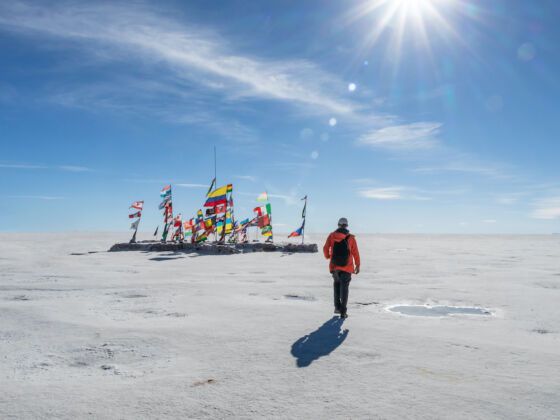
Being a global citizen means different things to different people. Here’s a chance to add your take.

Photo: gadl

It’s a tough day for travelers who like to explore outside of “acceptable” countries, as Iran charged the three American backpackers detained in July with espionage. Our thoughts and prayers continue to be with them.

So I was glad to come across something a bit positive happening in the world.

Project Explorer, who provides free cultural education programming for kids and teens, is posing the question, “What does it mean to be a global citizen?” They are asking that people make and upload a video answering this question with their own thoughts or experiences.

So far, the likes of Archbishop Desmond Tutu, Russell Simmons, and Ziggy Marley have posted their answers. Also, many other lesser known – but just as important activists – such as Scott Harrison of charity: water and John and Charles of…well, Chelsea, add their two cents on “possibility and action” and the importance “being nice.”


Find more videos like this on ProjectExplorer.org’s Good Global Citizen

Now comes your turn. We’re challenging BNT readers to make a video and add their own take on what it means to be a global citizen.

Where To Go For Answers

Need some inspiration? Beginning with desire in the form of a journal entry or a video can ultimately lead us to answers. As Valerie Ng explained in her article, Why I Disobeyed My Family and Traveled the World:

I documented my grand plans for international travel in a Spanish essay in high school…[after traveling abroad] it became increasingly apparent that the world was a fascinating place, and I wanted to acquaint myself with the myriad of cultures inhabiting the earth.

Or, look no further than Daniel Harbecke’s piece, How Travel Will Save The World. In it, he explains, “The belief that humanity is encompassed within a single community is called cosmopolitanism…[it] has come to mean “worldly” or “sophisticated,” but in the original sense meant a universal love for all people that rejects borders.”

And, if you have kids in tow, or plan having them in the future and hope to make them a global citizen, check out Karen Banes’ piece, The Educational Value of Long Term Travel with Kids. In it, she notes:

Kids on the road learn naturally. They learn about physical and human geography, world history, religion (although not just the dominant one in their country of birth), wildlife, nature, environmental issues, campcraft, cooking, art and science. They also learn manners, tolerance, and respect for other cultures. They learn to make friends, and say goodbye.

After you make the video and upload it to Project Explorer site, be sure to post the link in the comments section below.


  • Stumble It

About the Author

Christine Garvin

Christine Garvin is a certified Nutrition Educator and holds a MA in Holistic Health Education. She is co-editor of Brave New Traveler and founder/editor of Living Holistically...with a sense of humor. When she is not out traveling the world, she is busy writing, doing yoga, and performing hip-hop and bhangra. She also likes to pretend living in her hippie town of Fairfax, CA is like being on vacation.

1 Comment... join the discussion!

  • Jessie Kwak replied on November 16, 2009

    I fully agree that travel and the interchange between cultures will help to ease tensions. I worked for a while with an organization called Global Citizen Journey in Seattle (http://globalcitizenjourney.org/), which worked very deliberately to connect groups of Seattle-ites with groups of people in various African countries over a common project.

    I thought the approach GCJ used was so novel, and the deliberate use of conversation techniques to connect people created an environment where people could share stories and really connect. The people who came back from these Journeys didn’t just say “oh, I had a great trip,” they remained connected with the friends they had made overseas.

    Thanks for the article, I think this is such an important topic!

    (Report comment)

    ↵ Reply

Leave a Comment

Jump To Category:


Explore the Community


Latest Community Blogs


Popular Stories on Matador

How to Move to Paris with No Money

This is for Americans with insufficient funds, but with... 

Hostel Sex: A Practical Guide For Backpackers

Getting it wherever a backpacker can...... 

10 Traveler's Tips For Rocking A Nudist Beach

Travelers tend to enjoy ultimate freedom on the road, t... 

12 Personal Travel Websites That Will Make You Quit Your Day Job

... 

Drunk and Driving On Berlin’s Beer Bike

Cars nervously skirt by the slowly moving vehicle, tour... 

10 Multi-Use Items You Should Consider Packing

... 


Focus


Editor Blogs

Friends