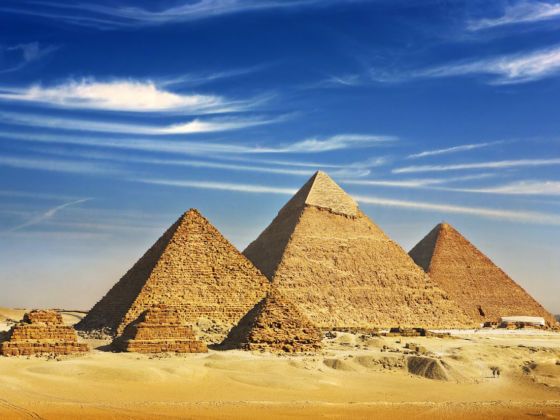
Transcontinental flights from New York to Europe generate up to two tons of carbon dioxide. Feature photo by author. Photo by Almighty_Fotografie
1. Travel damages the environment.
Travel is, almost by its very nature, bad for the environment.
Even if you travel the Middle East exclusively on horseback, you still have to get there in the first place. And just one transcontinental round-trip flight – let’s say from New York to Istanbul – generates two tons of carbon dioxide. That’s 10% of the average person’s annual carbon footprint in just one afternoon.
Going to Phnom Penh to do some volunteer work? A round-trip flight from New York with two layovers consumes a full quarter of that yearly average in just a day or two.
The more you travel, the worse it gets.
Of course, if you don’t fancy riding bareback across Asia, getting around your destination will pump even more poison into the sky, especially since many poor countries lack the already questionable environmental standards of the United States or other developed countries.
Unless you plan on crossing the ocean in a sailboat, do the environment a favor. Stay home and drive a hybrid.
2. Travel commercializes a nation’s greatest monuments.
In the Topkapi Palace in Istanbul there is a room which only the Ottoman Sultans could enter. Even they could enter it only once a year. That room contains the holiest Islamic relics outside of Mecca: the mantle of the Prophet. His swords. A hair from his beard. His footprint.
In Ottoman times, this room was wholly holy. Now, hundreds of tourists tramp through it every day.
These religious relics have been commodified by travelers who legitimately and earnestly wish to see these pieces of history. Nevertheless, the very presence of non-Sultans drives away any chance of a truly authentic experience.
It is natural to want to see the wondrous with your own eyes. But when 10,000 people visit a monument every day – like at the Great Pyramid complex at Giza – they destroy the very wonder they set out to see.
The grounds around the Pyramid are no longer a fitting setting for those ancient tombs; it is not the remote desert plateau of centuries past. The grounds look like a trash dump. Years of refuse cast aside by careless tourists and locals have destroyed the pristine beauty that made Giza famous.
A few truly sacred sites remain scattered across the world: the Crown Jewels of Scotland, the royal memorabilia of King Tut. You will know when you are in one of these holy places because the guards won’t let you take photographs.
3. Travel turns culture into a commodity.
Fiesta Americana Villa in Cancun caters specifically to the tourist industry. Photo by Serge Melki
Unlike all those common tourists, you aren’t deluded by cute tour packages. Not you.
You travel far off the beaten path, the true spirit of a country. And when you get to one of these secret hinterlands, you will find entrepreneurs who are more than happy to sell you the authentic experience, complete with everything you perceive it to be.
You will sleep in the traditional housing that nobody actually uses anymore, buy the trinkets people maybe — maybe! — used to wear a hundred years ago. You will go home happy but none the wiser about what the locals’ lives are actually like. Wherever travelers go, a travel industry will arise to accommodate them and meet their needs. The only difference is scale.
How can you get the authentic experience?
Learn the language, live there for years, put down roots and become an eternal visitor. Everyone will know you and treat you well. But you will forever be the guest, the expatriate, telling stories of your home country late at night.
Might as well stay home.
4. Travel creates foreign dependence and promotes fragile economies.
Many smaller countries, especially the Caribbean and Pacific islands, depend almost entirely on tourism and agriculture for income. Both the people and the governments themselves become dependent on wealthy visitors like you.
In Cairo, seven year old boys will tug on your shirt incessantly and ask if you’d like to buy a hat or a bottle of water. Dozens or hundreds of enterprising merchants set up shop wherever foreigners go. And travelers flood the country with very easy money.
Tourists in Barcelona. Photo by Minifig
The trouble comes when the country is flooded by something more literal than money.
A strong hurricane. Or a terrorist strike, or a currency devaluation, or an increase in the cost of oil – the backbone of their economy dries up overnight.
It happened in 2001 when America suddenly became fearful. It happened in 2006 after the tsunami wracked the Indian Ocean.
Without tourism, many of these countries have no safety net. No matter how judiciously you spend your money abroad, you contribute to increasing dependence on this single industry.
Some places, like Dubai, reinvest the money to diversify their economy. Fiji has propped itself up by exporting luxury water. But most countries are not so farsighted.
Your dollars allow them to rest on their laurels, allowing a single disaster to plunge an entire nation into poverty.
5. Travel promotes crime.
It doesn’t matter how carefully you watch your wallet. The influx of comparatively wealthy travelers into a depressed economy guarantees that crime will flourish.
People everywhere pursue opportunity, and scamming foreign tourists is nearly as good a career option as legitimately servicing them.
Does the Egyptian Museum really need dedicated toilet attendants? Does an endless line of overpriced bistros add the same value as manufacturing or infrastructure development?
The vast majority of travelers don’t experience crime abroad. But every time travelers go to countries substantially poorer than their own, they allow crime to proliferate.
It is too great an opportunity to pass up in places where other opportunities, educational or vocational, are often far out of reach.
6. Long-term travel promotes broadly reaching but shallow experience in the traveler.
If you don’t care that your travel perpetuates a cycle of poverty and dependence, at least think of yourself.
It’s impossible to get even a semblance of an authentic experience abroad, even if you volunteer on traditional farms, shy away from metropolitan areas, or join the Peace Corps.
Your mere presence makes the experience inauthentic. When a guest visits your home, you act differently. Even an American who emigrates to Britain or Australia shall never have quite the same experience as someone born and raised there. It’s too late.
If you truly want an authentic experience of a culture, stay at home.
Immerse yourself in your native culture. Put down roots and forsake wandering. Experience the multifaceted joys of the one country you have most neglected – your own.
Once you truly join a community, you may find what you always sought abroad but never quite found. You will learn how other people live.
COMMUNITY CONNECTION
Do you agree that travel is unethical? Can any of the threats posed by travel be minimized or eliminated? Share your thoughts below.
Other articles engaging issues about the ethical dilemmas travelers encounter on the road include The Shameful Truth About Sex Tourism, and The Secret to Avoiding Beggars.
About the Author
Related Posts
42 Comments... join the discussion!
-
-
And are there seven (as in the title) or six (as in the article) "reasons"?
↵ -
Possibly the most useless article I've ever read.
SU Thumbs Down.
↵ -
i totally agree. complete bs. Only travelers know the true joy of nature, traveling and experience
↵ -
Whew! Where to start with this one? I've got a bone to pick with pretty well every point you make here, but I'll start with just a couple:
1) Throughout this piece, and particularly in #s 3, 4, and 5, you have a fairly myopic focus on "travel" as meaning "travel to a Third World country" — this ignores the fact that modern, wealthy countries with diversified economies, such as Britain, France and Italy, remain among the world's most popular destinations. I don't think any of those three points is valid in the context of First World travel, which does in fact make up a huge percentage of travel overall.
2) I'm entirely puzzled by #6, too. You write: "Your mere presence makes the experience inauthentic… Even an American who emigrates to Britain or Australia shall never have quite the same experience as someone born and raised there. It’s too late." Again, I think you're seeing things in black and white when there's a lot more nuance to these issues.
An immigrant, no matter how long they are in a country, can't have an "authentic" experience? Well, that's a debatable point as is, but I'd rather point out the impossibility of defining an immigrant versus a "real" citizen of a country than delve into issues of xenophobia and cultural absolutism. For whom does authenticity become impossible? The man who emigrates as an adult? How about as a teenager? As a young child? Does the American-born baby who emigrates to Britain before he can read, or speak, stand a chance at an "authentic" experience? For that matter, can even a British-born child of immigrants have an "authentic" experience? Can any North American descendant of immigrants (and yeah, that's the vast majority of us) have an "authentic" experience here in our own "adopted" homeland? You could keep going endlessly. It's too easy to play the "inauthentic" card, because it's too subjective to be definitely refuted.
3) As far as point #2 goes, I'll refer you back to my questions about the definition of inauthenticity. You wrote: "the very presence of non-Sultans drives away any chance of a truly authentic experience." So said the Sultans, certainly, who wrote the rule book after all. Priests also once said that no lay person could ever interpret the Bible, and that all communication with God must go through them. The Protestant Reformation was all about overturning that hierarchy; I see no reason why the Sultans' definition of authenticity should colour my experience of that room at the Topkapi Palace. I have been there, and I thought it was magical, powerful. If you were unable to appreciate it, that's your own shortcoming.
4) For points #1 I'll just say this: some things are worth consuming resources for. Really, almost everything we do harms the environment. Some people say the Olympics are a waste of resources; others say fine cuisine; others say travel. I say, culture and wonder and sport and festivals and the creation of beautiful things all have benefits that outweigh the harm they do.
↵ -
Beautifully stated
↵ -
Eva, you did a very good job of picking out a lot of the holes in this article.
1) You are totally right. I think the point is worth considering with regard to Third World countries, but travel to the First World is totally different. I had to be myopic to achieve my purpose, and you saw right through it!
3) I agree. That room in the Topkapi Palace is very moving and powerful, and it is wonderful for Muslims and non-Muslims alike that relics that once were hidden are now available for all to see.
It IS true that the experience is not what it once was unless you are a member of the House of Osman in exile. Historically speaking the experience is inauthentic–mere entry into the palace harem is inauthentic. But that doesn't mean the experience is bad. As you point out, this change is most definitely for the better.
4) I think this is your best point. Intercontinental travel IS awful for the environment. You state it rather poignantly:
Some things are worth consuming resources for.
Travel does some harm. But the benefits outweigh the costs.
↵ -
Glad you liked it! I take it your purpose here was to bait us into discussion, then?
↵ -
I understand that this is a "devil's advocate" kind of post, but I think that #6 takes for granted that people are just going to play tourist when they travel. I don't think you have to avoid cities to have a more "authentic" experience. You simply need to change the way you travel, spend more time and effort actually exploring an area, and meet people. I love nothing more than spending a leisurely week or so in a single city, just exploring neighborhoods and seeing how people live.
Great post though, even if you disagree with everything, it makes you think about how and why you travel.↵ -
I have lived in Mexico for a year, Austrialia for 4 months, New Zealand, Fiji, Alaska, and the Virgin Islands for a month each. In saying that, I have no problem traveling over to Canada to see in Whistler for the weekend even though I didn't get an "authentic" experience. And besides, 90% of the people I met at the bars, hotels, and working in store were…AUSTRALIAN!
↵ -
Apolon is a CRW – Crying Whining Baby!
1. Travel damages the environment.
He "wants nothing more than to explore the northern reaches of the world where no one bothers to go"? How is he going to get there? Pull his hybrid on a sailboat and go to the north pole? I don't think so.2. Travel commercializes a nation’s greatest monuments.
Start charging those 10,000 tourists visiting the pyramids a dollar and hire someone to pick up the garbage.
Restrict the amount of visitors like Machu Picchu3. Travel turns culture into a commodity.
Is he actually complaining about riches countries going to poor countries and spending money? Let's have everyone stay at home and let those 3rd world countries starve to death.↵ -
4. Travel creates foreign dependence and promotes fragile economies.
Or maybe it provide the building block for the country to become a powerful nation like India.
And his comment about Dubai, the only investing in that they are doing is to make things bigger and better. They don't care about safety standards, basic water and sanitation needs. It is still a 3rd world country that surrounds the big beautiful hotels.5. Travel promotes crime.
Is that like saying traveling the subways in New York promotes homeless people to beg for money. Solve the problem instead of shifting the blame.6. Long-term travel promotes broadly reaching but shallow experience in the traveler.
Is he some type of inbred, backwards, hillbilly from the country with a narrowminded view of the world?Whether you lived in a small town south of Cancun for a year like I did or stay at an all inclusive resort, I don't care. I would rather someone get out of their own backyard, their own comfort zone, and live life, have experiences, erase prejudices.
↵ -
"inbred, backwards, hillbilly from the country"? Glad to see your travels were so "successful" in erasing your prejudices. I'm sorry, but your ranting completely undermined any legitimate point you were trying to make.
↵ -
LOL! Very good point
Change that to white supremacy groups like the KKK Members in America, the Armed Forces of Rwanda (FAR) and Rwandan Patriotic Army (RPA) groups responsible for the Rwandan Genocide, al Qaeda and Taliban, etc.
I think the views and actions of those people I mentioned would change if they traveled more and interacted with different people and cultures. Hopefully, they would come to the realization that the world is bigger than themselves and learn to appreciate differences versus punishing those people because of their differences.
↵ -
I agree! Unfortunately, it's the people who are already open minded who are more likely to engage with new people and cultures.
Oddly enough, I've learned a lot about what it means to be Canadian from travellers and immigrants to my country. I've been fortunate to meet people who are willing to learn but also willing to teach and share their experiences.
↵ -
Generally speaking, I agree with you, although you shouldn't jump into the ad homimen quite so quickly! I'm hurt!
I like the idea of charging tourists a little extra and hiring somebody to clean up the Pyramid complex (although it's fairly expensive as it is… $50USD to see everything there, I think). I don't think restricting tourists would work simply because of the amount of wealth it generates for Cairo… there is real dependence on that money, which I really do think can be dangerous.
I think the best point you make is to 'solve the problem instead of shifting the blame.' A lot of these problems are real. But travel isn't necessarily the main cause, and even if it is, there are other solutions besides halting travel.
↵ -
And yes, I am from the states which is a melting pot of countries from across the world. According to this article, I shouldn't have even been born here. I am not native american so I do not have a true authentic experience. Half of me should go to Poland and the other half should go to Germany since I am half Polish and half German.
↵ -
And Native Americans can never have an authentic experience of American culture because they are outcasts or live in autonomous or interdependent reservations (usually).
I like your point Koch, and further, I'd like to say that ZERO cultures are pure or have ever been pure. There has always been trading between people. We should allow any country or group of people to grow and use their lands, monuments, and lives as they wish. Egypt will stop exploiting its pyramids once it obtains egalitarian views and learns to cherish its phenomenal, non-Muslim past. The reality of the world, as well, is that people – of any culture – once they make more money and keep contact with international communities, grasp a desire to travel, and tourist monuments will exist until people become too poor to travel, or nations revert back to isolation and dictatorship.↵ -
Interesting post, Apolon. It's something that definately needs to be discussed. That being said, you can argue that traveling actual helps almost all of those categories more than it hurts them in the current day. A country like Costa Rica funds it's forests because that's the reason people go there and spend money. Without tourism, it's likely the land would be used for farming and the tree wood for export.
The same is true for national monuments. There is no way a country like Cambodia could afford to maintain Angkor Wat without tourist cash flowing in.
Some restrictions would certainly be helpful. As it was mentioned earlier about limiting the number of visitors to Machu Picchu each day is a fair compromise.
↵ -
Echoing Eva's sentiments, I also think travel is worthy of consuming resources, as long as we are mindful of the footprint we make and perhaps help offset it with other aspects of our lives (e.g. consuming less when at home, using public transit, cycling, giving back to the world, etc). Traveling promotes understanding and peace. We are inhabitants of the world, and we should learn about it, else ignorance rears its ugly head.
"Travel promotes crime" – huh?? Isn't that like saying "banks promote robberies"?
"When a guest visits your home, you act differently" – I can't speak for you, but I am myself when I have a guest. In fact, I can't be anybody else but myself. What does that even mean…that you're never yourself unless you're alone? And what if you're lying to yourself? Then who are you?
"Immerse yourself in your native culture." – are you talking about the more, more, more, faster, faster, faster, work harder culture? Cuz I don't care much for that. I've lived in that for 30 years, and I've had enough of it (insert plug here: "Enough" by John Naish).
"Once you truly join a community, you may find what you always sought abroad but never quite found. You will learn how other people live." – I've truly joined a community. It's a community of like (and open) minded people who share similar interests, even though we are separated by great seas and big land masses. Being born into a community doesn't make it your community; it doesn't mean you have to agree with it (much the same goes for religion, but that's another topic altogether).
I applaud BNT for publishing this, and also the author who wrote it. I have a feeling that he doesn't truly believe all of it (but is "playing" devil's advocate) and sparking conversation, which is always a good thing.
↵ -
It would seem to me that your ideas about authenticity are skewed. Do you really believe that authentic experience is absent of outside influences and devoid of change? Why is that? What does it mean to be an insider vs. outsider, culture vs. tourism? I think an exploration of these ideas in a deep and meaningful way would reveal more complexity and ambiguity than is found in your article.
Good for debate, though.
↵ -
Thanks for opening a conversation about this article. It's important, both as editors and as readers, to publish and discuss travel from varied perspectives– even those with which we don't agree.
Vagabonderz, I think think you've offered a thoughtful, respectful response:
"travel is worthy of consuming resources, as long as we are mindful of the footprint we make and perhaps help offset it with other aspects of our lives (e.g. consuming less when at home, using public transit, cycling, giving back to the world, etc). Traveling promotes understanding and peace. We are inhabitants of the world, and we should learn about it, else ignorance rears its ugly head."
I'm definitely interested to hear what others think as well.
↵ -
I'd like to add here to Eva's comments, which I think were right on the mark. The notion of all travel experiences being inherently "inauthentic" is rather absurd–if you're going to set up such a stark authentic/inauthentic dichotomy, what, then, is authentic? Nothing, it seems–or, taking your argument to the extreme, only being born and raised in one particular spot on Earth to two parents of the same cultural and ethnic descent. This means anyone born to, say, an African American mother and Cuban father in Brooklyn, or a Nigerian father and a British mother in London, or an American father and a Chinese mother in Beijing, is doomed to a life of inauthentic experiences.
I am married to a Mexican husband and live in Oaxaca, Mexico, and while I would not call myself "Mexican" my experiences here are not somehow inauthentic by virtue of the fact that I was born in Columbus, Ohio, USA. My strongest friendships are with my friends here, who come from places as diverse as small villages in the Sierra Norte, the center of Mexico City, Veracruz, and the matriarchal societies of the Oaxacan isthmus. When we go to our friend's Aztec/Catholic wedding in Mexico City in May, I wonder what part of that experience is authentic or inauthentic? Your categories don't make much sense to me.
Aside from that, your article is very demeaning to the people of developing countries who you assume are lazy and simple-minded. The "your dollars allow them to rest on their laurels" comment is particularly offensive, assuming that people in developing countries are just sitting around fat and lazy while tourists throw dollars at them. Most people–not everyone, of course–I have met and know in the tourist industry work far harder than I do to earn a living. The mountain guides who took me up Cotopaxi in Ecuador climb that mountain four times a week, as one example. The people I know in Oaxaca who work at or run restaurants for tourists, or who give tours or teach classes, are constantly working and are grateful for more work. And I highly doubt any of these people is simple-minded or lazy enough to choose crime over running their business or getting an education because they view tourists as "easy money."
I do think you make a good point about tourism rendering economies fragile–Oaxaca's economy crashed in 2006, when a social revolution brought tourism to a standstill. Then, crime became a problem in Oaxaca–not because of the arrival of tourism encouraging people to be lazy and rob tourists, but because of almost zero police control of the city and the economic downturn caused by the decrease in tourism. The victims of these crimes were not tourists–they were mostly locals.
Anyway, you raise an interesting question: how can economies that are highly dependent on tourism weather crises such as that which took place in Oaxaca in 2006? Any ideas on this?
↵ -
You've made excellent points, however; travel gives people the opportunity to learn about a foreign county and it's people. It's a great way to promote peace and tolerance in this world. Maybe we could come up with better ways to travel. Perhaps we will have "hybrid" planes instead of ones that consume a ton of fuel and release emissions into the air.
↵ -
Fun article! It didn't phase me much, however. I'm used to polluting everything I come in contact with.
I'll write a follow-up one day about the havoc we cause just by getting out of bed. But before that, add #7 to this list: Travel creates its own religion, complete with canon, mantras and infidels.
↵ -
Always good to hear from you, DH. Got a post in you about Travel as Religion? I know you do…
↵ -
But of course! But I have to clean the place for New Year's, so I'll get back to you next year. HA! HA HA! That's funny and stuff.
↵ -
Good thoughts, Sarah. As for your last paragraph – how about you? Think you can link up the Oaxaca crash with some thoughts on how best to grapple with the issue in the future?
↵ -
Hey Tim–way to throw the ball back into my court! It's a really tough question, but some of the things that here are some of my ideas.
First of all, working on fair trade connections. For example, Zapotec weaving is a huge tourist draw in Oaxaca. Many tours go to Teotitlan del Valle, a Zapotec weaving village, and tourists purchase rugs and other items made with natural dyes using traditional Zapotec processes. The inhabitants there took a huge hit with the movement in 2006. So perhaps linking those weavers with fair trade companies in the U.S could keep them weaving and earning an income during times of crises, as well as promoting an understanding of their products and the processes behind them in the U.S.
Secondly, a lot of government funds need to be redirect to impoverished villages in the neighboring regions, because what happens is that many people from these areas move to the city to sell trinkets or beg, and when tourism goes down they suffer greatly. Plus, the kind of income they make from doing this is not sustainable and does not contribute to a healthy lifestyle, and they're really not spending time in their communities. So doing some different types of management at the local level is necessary to avoid having people in need, without sufficient resources, depending on tourists for a meager income. It also avoids interactions that I don't feel are very productive for anyone–little kids begging for money in the Zocolo, for example, does not really benefit the kids or the tourists and creates an unhealthy economy in the first place.
And finally, redirecting cafes and bars and restaurants aimed at tourists to appeal to the local population. I think this has great long-term benefits, because it avoids creating the kind of backpacker joints a local never sets foot in. My husband's brother owns a cafe in Oaxaca that was at first frequented predominantly by tourists, but has over time attracted a huge following among locals. The place is packed now with expats, tourists, and locals, and has avoided getting caught in the trap of being entirely dependent on tourist income.
So those are my ideas! Thanks for asking. I'd be interested to hear what other people think about how places should cope with dependency on tourism (sounds like some sort of bizarre addiction…)
↵ -
dependency on tourism…a planet threatening plague according to this journalist, who, incidentally, was one of only 2 journalists to visit Phnom Penh during the Khmer Rouge period.
http://www.washingtonpost.com/wp-dyn/content/arti...
↵ -
Even if the article's author is correct and foreign travel IS unethical, so what? It's like arguing that meat-eating is unethical or that owning a car is unethical: Carnivores, motorists, and foreign travelers aren't going to give up their lifestyles to please PETA, the Bicyclists & Pedestrians Association, or the Nationalist Alliance of Xenophobes and Stay-at-Homes.
"I'd be interested to hear what other people think about how places should cope with dependency on tourism"
Easy: Find oil or coal, or create manufacturing sweatshops that give locals alternatives to employment in the tourism industry.
↵ -
what about reinvigorating local food-based economies, like people are doing in northeastern thailand and northeastern vermont? that seems like a better alternative to tourism dependency.
durant, great to see your comment here. your voice, which i know from travelwriters.com, is welcome.
↵ -
What a great conversation! I "get" what Apolon is after! Save the planet, Kill yourself!
↵ -
hahaha, frickin' hilarious. u rock!
↵ -
As this is the Devil's Advocate, expect the column to try to still up conversation. Everything has pros and cons and travel is no different. Get on or in your plane, train, boat or car and see the world. You'll be so much better for it.
↵ -
I'm not sure if this article is 100% serious or not. If so, then the author is a true pessimist. Sure there are many downsides to travel, but there are many positive sides as well. And I believe that the positives far outweigh the negatives.
↵ -
Hundreds of pixels had to die for me to post this message. And for what?
↵ -
There's no way you'll ever convince me that traveling is unethical. Terrorism or not. Travel OPENS the mind!
If more of us traveled, there might be less fear, possibly less terrorism everywhere. Too idealistic? I hope so.↵ -
Um…just off the top of my head:
Ethics, at best, are slippery things…
…just as slippery as the lack of them…
…since both the dark and the light are real and true.
Exploring the northern reaches would pollute it…
…and expose Santa for the commercial farce he is…
…brrr, I like the sun myself.
Otherwise, here here. The Devil needs an advocate…
…and a little sympathy doesn't hurt either…Whoop whoo…
…you know, what with EOE and all that.↵ -
Well, I am glad I won''t be meeting you on my next trip abroad.
Unethical??? I guess you could argue the the Internet, blogging, workling for a big company, having travel related advertising, eating meat, driving to the polling place to vote, and a million other things are unethical.
I'm assuming that your post is simply an attempt, and a bad one at that, at being witty and controversial. Unfortunately, the bottom line is that it is neither.
While you may have received lots of hits form this one, I suspect most readers like me, will not return.
SU – thumbs down.
↵


