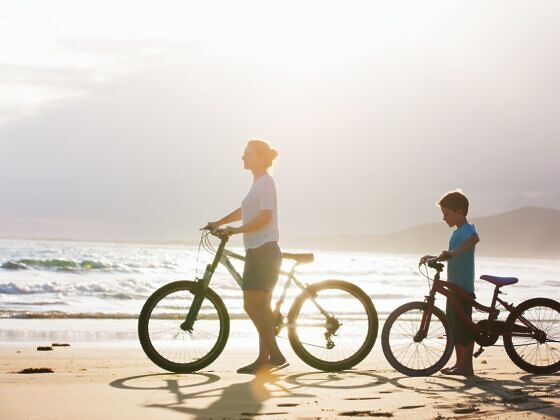
Photo: notsogoodphotography
When I flipped over the handlebars of the bike I’d rented in Vancouver, BC, I earned some impressive bruises, a badly lacerated spleen, and new fears stifling my wanderlust.
Luckily, I was hospitalized in an English-speaking country only a few hours from friends and family in Seattle. But what if an accident like this happens on one of my pipe-dream adventures elsewhere in the world?
Turner Wright previously published a piece at BNT about how to handle medical emergencies on the road. It gives good advice, such as learning the word for hospital in the native language and cultivating patience.
But even if I’d been prepared with traveler’s insurance and – had I been in a non-English speaking country – learned the words I needed to communicate, I would still have had to cope without the support network I have at home.
Simply being in another country without my friends and family made my problems more complex.
Future Plans
During my five nights in the hospital, I thought about how my ordeal would affect future travel – my dreams of backpacking in remote places or spending a year living abroad. Would the fear of potential injury or illness change me?
Photo: delicategenius
I fluctuate between feeling that I’ve paid my dues to karma and can’t possibly have any more bad luck, and the rather jarring realization of my body’s fragility.
As J. Raimund Pfarrkirchner notes in his piece, The 5 Deadliest Travel Fears (And How To Defeat Them), “Fear of the unknown hails from something deeper, something practical at times…had the dodo been frightened of visitors to its native Mauritius, where it had no natural predators, the dodo might be flourishing today.”
While I’m eager to continue traveling – and cycling – I don’t actually have any plans for the foreseeable future. I may feel differently when plans and ideas become more concrete. Inspiration comes from people such as Robin Esrock, who was hit by a car while driving his scooter, and ended up on a stretcher instead of going to work that day.
Instead of staying home and buying a car, Robin decided to buy a solo round-the-world plane ticket and backpack around the planet.
The Stranglehold of Fear
It’s likely these fears will fade and I’ll get back to my normal, travel-hungry self, but there will probably always be a part of me that wonders if this can happen again. Phobias can take hold at any time in one’s life; author Samantha Ang discusses how, after being “born traveling,” she developed a fear of flying based on overhearing a mother’s words to her child about the dangers of take-off and landing.
And what if another accident does happen? If I endured serious injuries in a first world, English-speaking country a mere three hours from friends and family, what are the chances of something happening while traveling solo, to remote places, or to countries with less advanced medical technology? Pretty high.
I hope this fear will teach me to be as prepared as possible, but there’s always the possibility of an accident, a mistake. There will always be factors out of my control.
Tragedies can happen even to the most careful people.
Has fear or risk ever prevented you from traveling, or changed your plans in some way? Share your thoughts below.
About the Author
Related Posts
7 Comments... join the discussion!
-
-
I would not say travel insurance is worthless. You just need to make sure you have the proper MEDICAL travel insurance for the place(s) you are going. You give the company the locations, you must tell them of any pre-existing medical conditions, any ‘extreme’ activities you may be doing i.e. skydiving and you find the best policy for you.
Sure alot of places wont take Visa. As a matter of fact the Visa won’t matter if the hospital bill is $10000 and your card limit is $2000. Medical travel insurance just gives you piece of mind so that you can enjoy yourself and be able to take care of yourself in case something bad happens.
↵ -
Neither visa nor travel medical insurance will help if the hospital deals in cash only. Or if there is no hospital.
The piece of mind given by travel insurance is a false one. The small print can well turn around to bite you in the you know where. Insurance companies are in business to make a profit, claims cut into the bottom line. If an insurance company can deny your claim. . . they make more profit.
No one can insure you from getting hurt, you must accept the consequences of any at risk activity and make your own risk evaluation.
↵ -
Of course you should be careful. No one is saying that travel insurance is going to give you a magical cloak to protect you from everything that can happen.
All I am saying is for the circumstances and places where it is valid, use it.
↵ -
In my experience, it wasn’t the risk of injury that inhibited my travel plans… it was the aggravation of previous ones. I was down in New Zealand on a one year break from my job when my groin (which I’d torn back in Sept) and my back were injured. Neither were enough to send me to the hospital, but they did do a good job in making most physical activities difficult for a while.
To make a long story short, knowing that I could cut my travels short and return to my job (which had full benefits for physio and such), I came back to Canada and started the physiotherapy on the body. One thing I did learn along the way during my travels was that my health and fitness was my main priority. Being injured while on the road makes for a miserable time.
The irony of it all was that no more than six weeks after returning home, I wiped out on my bicycle on the way to the office and torn part of my quad and injuring the back even more.
↵ -
Thanks for the bounceback, Megan. I’m still a little afraid of the bike after that incident, but I think the injury just inspired me even more to get back out on the road. After all, getting injured and doing rehab in a non-English speaking country is an adventure in itself, and makes a great travel story to swap. I know some people who even share the stories of diseases they’ve had while abroad, in almost an attempt to “collect ‘em all.” So, I’ve broken a wrist in Japan, I guess that leaves… an ankle in Africa?
↵


